About Trifolium wormskioldii Lehm.
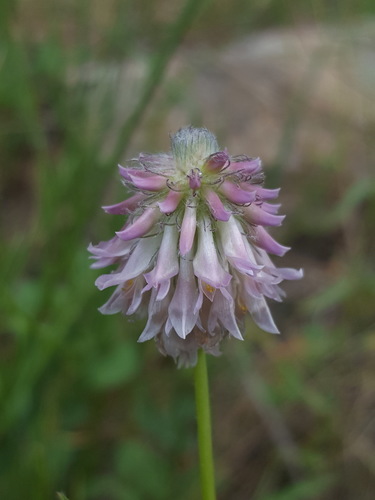
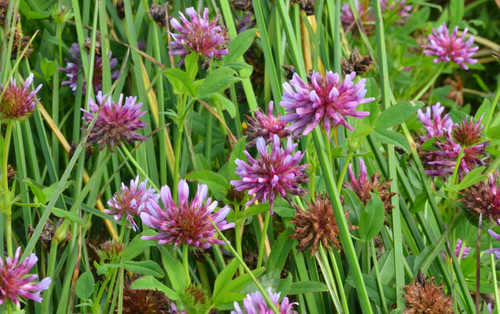
Trifolium wormskioldii Lehm. is a perennial herbaceous legume that sometimes grows in a matlike form, with either decumbent or upright stems. Its leaves are composed of leaflets that are 1 to 3 centimeters (1/2 to 1 1/4 inches) long. Lower stipules end in bristle tips, while upper stipules may be toothed. This species produces rounded inflorescences that measure 2 to 3 cm (3/4 to 1 1/4 inches) wide. Its sepals are bristle-tipped, and corollas are pinkish purple or magenta with white tips.
This plant is native to the western half of North America, ranging from Alaska through California down to Mexico. It is a perennial herb that grows in a wide variety of areas, from beaches to mountain ridges, at elevations below approximately 3,200 metres (10,500 ft). Documented habitats include chaparral, oak woodland, grassland, yellow pine forest, red fir forest, lodgepole forest, subalpine forest, and wetland-riparian areas.
Many Native American groups living in western North America use this clover as food. The herbage and flowers are eaten raw, and are sometimes consumed salted. The roots are typically steamed or boiled and eaten alongside fish, fish eggs, and fish grease. This species also acts as a host plant for caterpillars of the Western cloudywing butterfly (Thorybes diversus).