About Trifolium hybridum L.
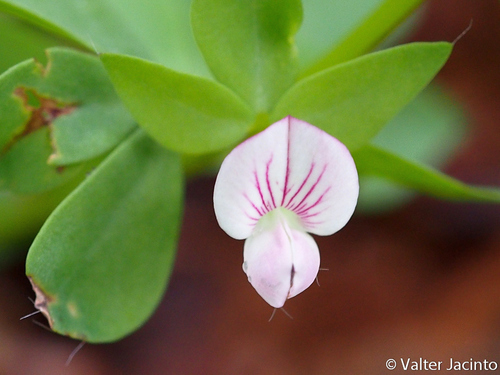
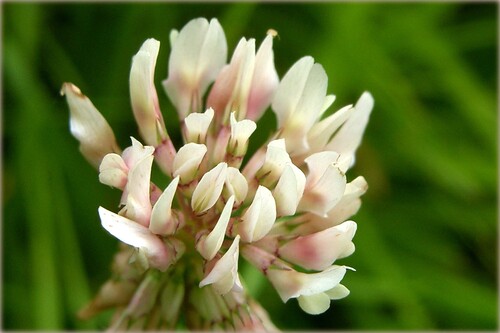
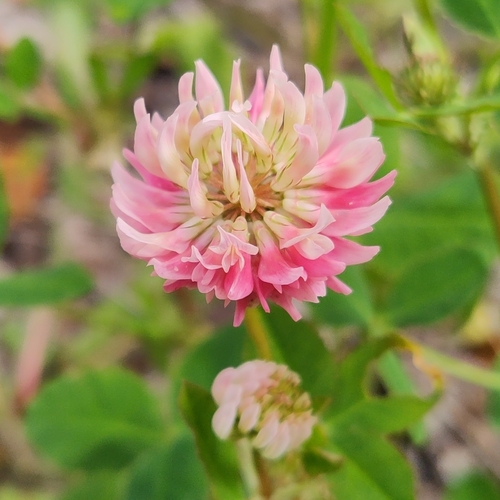
Alsike clover, Trifolium hybridum L., is a perennial plant with a semi-erect, sparsely branched, grooved stem that is hairy in its upper regions. Its leaves are alternate and stalked, with small stipules. Each leaf has three unspotted, ovate leaflets with blunt tips and finely toothed margins. The inflorescence is densely globose and borne on a long stalk. Individual florets have a five-lobed calyx and an irregular corolla made of five pink petals: one upright "standard", two lateral "wings", and the lower two petals fused to form a "keel". Each floret contains ten stamens and a single carpel. Alsike clover is native to most of southern Europe and southwestern Asia, particularly in mountainous areas. It is widely cultivated as a forage crop, and the forage-use subspecies T. h. hybridum has become naturalized further north in Europe and in other parts of the world. Its natural habitat includes fields, meadows, roadsides, banks, and waste ground. When included in seed mixtures, it rarely persists after the sward closes. There is limited evidence that Trifolium hybridum can cause toxic effects in horses, including photosensitization and what is known as Alsike clover poisoning. Photosensitivity in horses, also called alsike rash, is a reversible condition with an unknown mechanism. A horse diet consisting of at least 20% Trifolium hybridum over four weeks can lead to poisoning, which includes harmful neurological effects and liver failure. The active toxin responsible for these effects is unknown. Handling the plant can cause skin irritation. In horticulture and agriculture, Trifolium hybridum has been found to quickly lower soil pH and increase its own viable reproductive area, while reducing weed bio-density by up to 57%. Under suitable conditions, it can become invasive if not properly managed. For inbreeding, disadvantageous changes to plant height, persistence, and vigor occur unless the plant is selectively bred to maintain these traits.