About Trifolium fucatum Lindl.
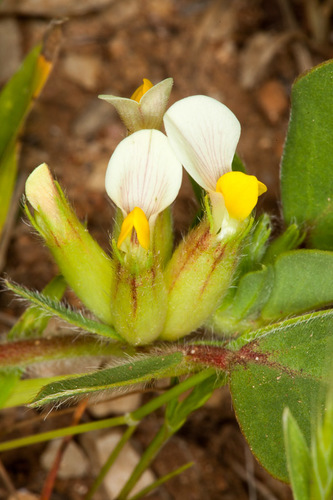
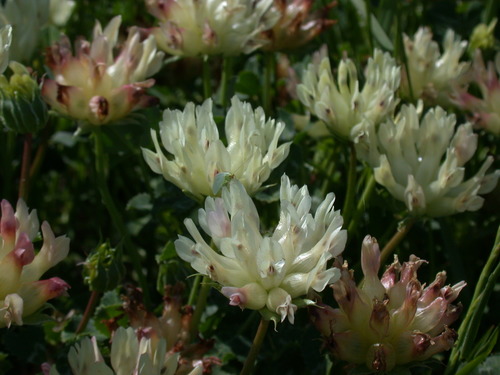
Trifolium fucatum, also called bull clover, is an annual herb that can grow in either decumbent or erect forms. Its stem is often thick-walled and hollow. Its leaf blades are composed of oval or rounded leaflets, which may have smooth or toothed edges, and the leaves bear large stipules. The inflorescence is a clustered head of flowers, with a base made up of wide bracts. Each individual flower has a corolla 1 to 2 centimeters long, which is white or yellowish with purple tips. As the fruit develops, the flower becomes inflated. All parts of the plant—the leaves, flowers, young seedpods, and seeds—are edible. Bull clover can be eaten both before and during its flowering period, and can be consumed raw, baked, or steamed. When harvesting leaves for eating, it is recommended to harvest only a few leaves from each plant, rather than removing an entire plant. Bull clover has a more pleasant flavor when it grows in moist soils. Indigenous peoples have been recorded consuming this clover from February to April, before the plants bloom. It is recommended to dip or boil the plant in salt water before eating it, to prevent digestive upset. Consumers are also advised to try eating a small amount first to see how their body reacts to the plant. In most cases, eating moderate amounts of bull clover does not cause any problems.