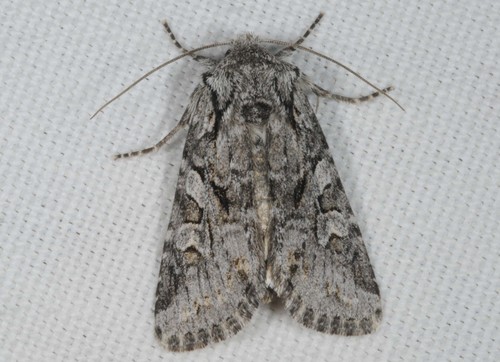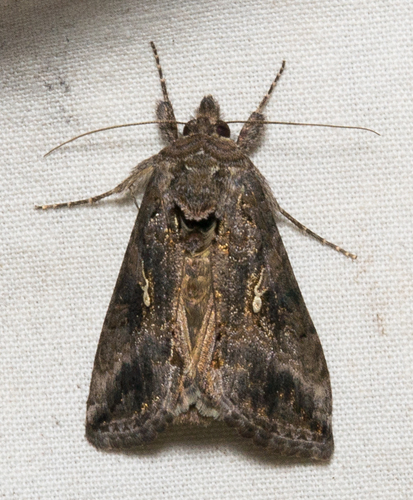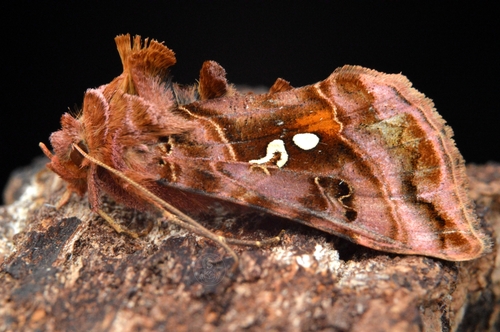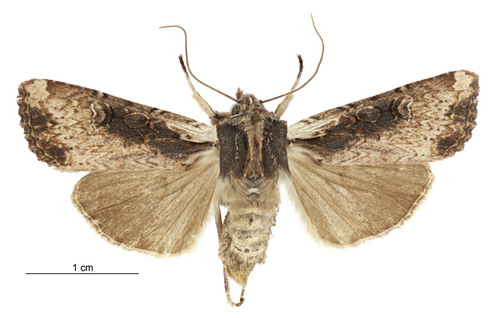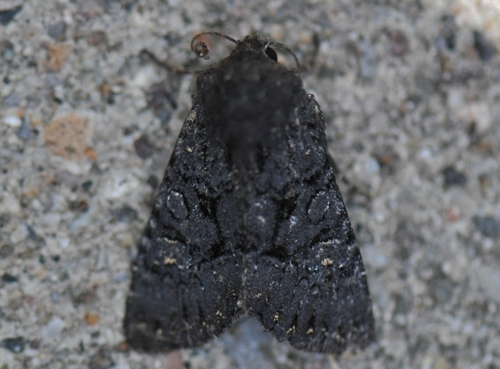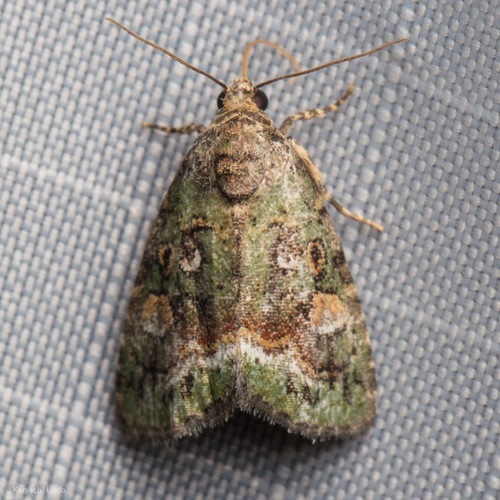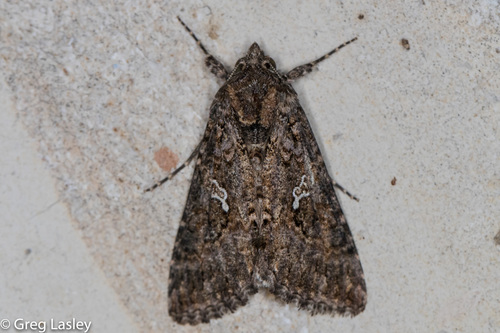
About Trichoplusia ni (Hübner)
The cabbage looper, whose scientific name is Trichoplusia ni, is a medium-sized moth in the Noctuidae family, a group commonly known as owlet moths. Its common name comes from two key traits: its preferred host plants, and its distinctive crawling behavior. Its main host plants are cruciferous vegetables such as cabbage, bok choy, and broccoli, which gives the name its 'cabbage' reference. The larva is called a looper because it arches its back into a loop when it crawls. While cabbage looper larvae prefer crucifers, they can use over 160 different plant species as hosts. Adult cabbage loopers are migratory moths. Migration and their wide range of host plants contribute to their broad distribution, which spans North America and Eurasia, reaching as far south as Florida and as far north as British Columbia. Cabbage looper larvae are a minor vegetable pest, especially for cruciferous crops. While they are not highly destructive, they have become difficult to manage due to their broad distribution and resistance to many insecticides, so multiple control methods for this species are currently under research. Cabbage loopers are found across North America and Eurasia, ranging as far south as Florida and as far north as British Columbia. In North America, populations seasonally migrate from Mexico to Canada. The species generally overwinters in Mexico or southern California, where winter temperatures stay above 16 °C (61 °F). It was once common in Florida, but sightings there have become less frequent because fewer cabbage crops are grown in the state. As northern regions of North America have grown warmer, the cabbage looper has gradually expanded its range further north. It only migrates to regions where temperatures are above 16 °C (61 °F), and it is rarely found in southern North America during summer due to high heat. Like monarch butterflies, cabbage looper populations are thought to migrate in groups, as there is very little genetic difference between source populations and migrating populations. Similar seasonal distribution patterns have been observed in Europe, where the cabbage looper can be found ranging from England to southeastern Europe. The baculovirus-insect cell expression technique produces large quantities of a target protein, relying on baculovirus’ ability to insert genes into target cells and trigger expression of the inserted gene. Cell lines have been developed from the tissues of many insects including fruit flies, mosquitoes, and silkworms. A cell line has also been developed from cabbage looper tissue. This cell line is especially valuable because it grows quickly, and its growth medium does not need to rely heavily on insect haemolymph. The cabbage looper cell line has also been genetically engineered to grow in serum-free media. Animal serum supports insect cell growth, but it is very expensive and can interfere with later experimental steps. Developing a cabbage looper cell line that can grow without serum allows it to be used to produce viruses and proteins in a more affordable, efficient, and high-yield way.