About Tricholoma murrillianum Singer
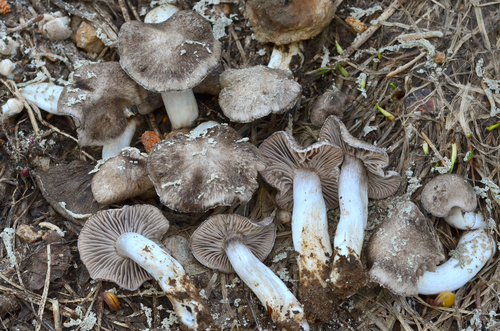
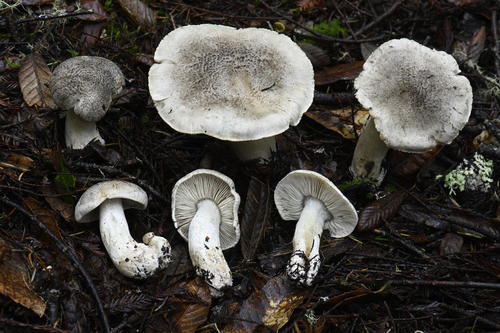
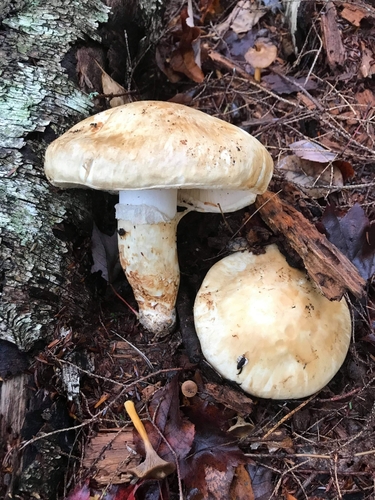
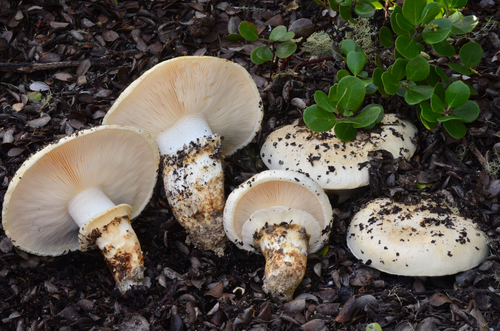
Tricholoma murrillianum Singer is a gilled mushroom that is mostly white with subtle tan tones. It forms ectomycorrhizal relationships with host trees. The cap of this species can grow up to 18 centimetres (7 inches) wide, and its gills are very closely spaced. The stem reaches a maximum length of 14 cm (5+1⁄2 inches) and retains remnants of a partial veil. It has a mild taste, and produces a white spore print. This species occurs in western North America between October and January. It grows especially commonly on the West Coast in sandy soil, in association with pines, Douglas-fir, tanoak, madrone, and manzanita. After production of the Japanese species Tricholoma matsutake declined due to the increasing spread of the pine-killing nematode Bursaphelenchus xylophilus, a global commercial matsutake harvesting market for related species has grown. Exports of this mushroom from western North America increased greatly over the last four decades. Prices peaked in the 1990s, when Western matsutakes reached up to $600 per pound. While prices have dropped dramatically since this peak, the annual matsutake harvest still supports local economies in many rural areas of the Pacific Northwest. Young, button-stage matsutakes are particularly valued. Illegal raking of wild matsutake patches can cause severe ecological damage, and Pacific Northwest matsutake harvests have declined in recent years, possibly due to deep raking and over-harvesting. As a type of matsutake, Tricholoma murrillianum is a choice edible mushroom that is highly sought after, especially in Asian cuisine. It is prized for its distinctive spicy odor and flavor, as well as its firm, meaty texture. Serious poisonings have happened when this species was mistaken for the toxic look-alike Amanita smithiana.