About Tricholoma equestre (L.) P.Kumm.
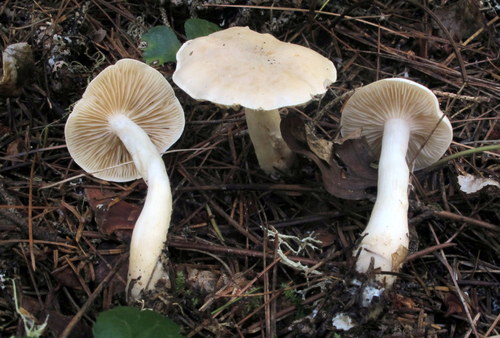
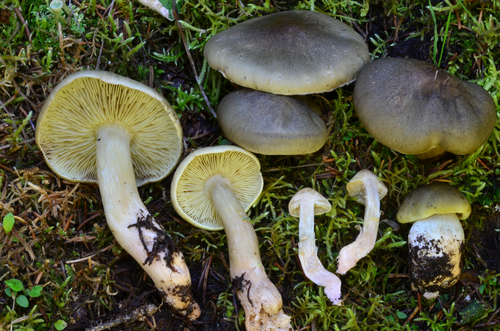
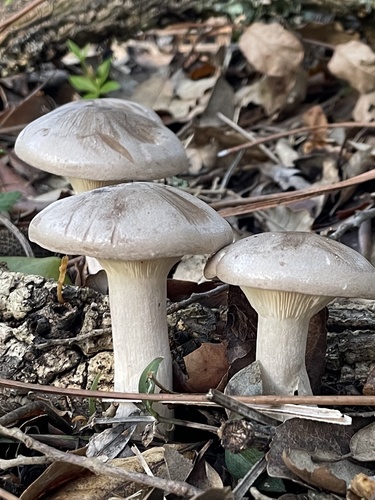
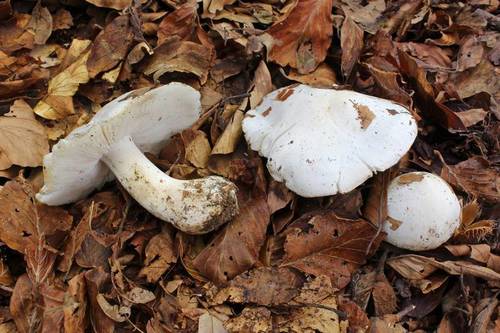
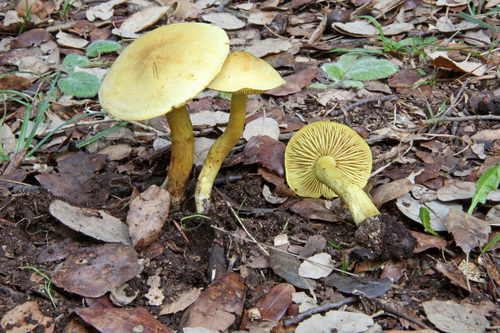
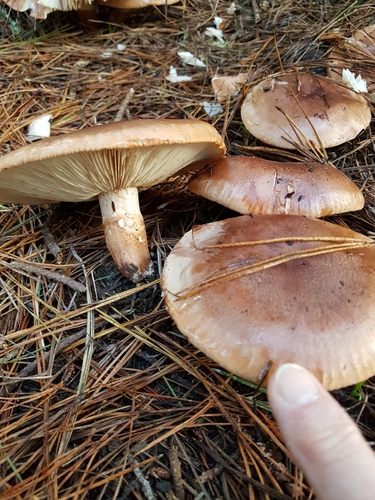
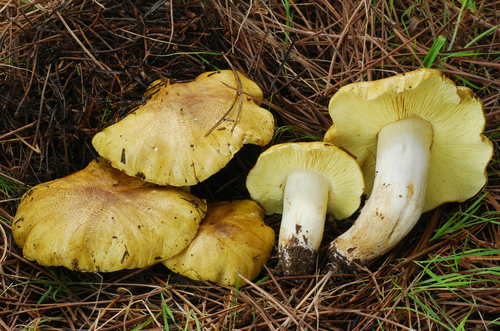
The cap of Tricholoma equestre (L.) P.Kumm. ranges from 5 to 15 centimetres (2 to 6 inches) wide, and is usually yellow with brownish areas, most noticeably at the centre. The outer skin layer covering the cap is sticky and can be peeled off. The yellow stem is 4 to 10 cm long and 1 to 2 cm wide, with brownish colour at the base. The gills are also yellow, the spores are white, and this species produces a white spore print. This species was long considered one of the tastier edible mushrooms, and is still classified as such by some authors; it was historically sold in European markets. According to legend, Medieval French knights reserved this species for their own use, leaving the common bovine bolete (Suillus bovinus) for peasants. The first concerns about toxicity of the species were raised in southwestern France. All people who experienced poisoning from T. equestre had eaten three or more meals containing the mushroom within the two weeks before seeking treatment. One to four days after their last meal with the fungus, patients experienced muscle weakness, sometimes accompanied by pain. This weakness worsened over another three to four days, and was paired with feelings of stiffness and darkening of the urine. Patients also reported episodes of nausea, sweating, and reddening of the face, and no fever occurred in any cases. No poisoning cases have been reported in North America, leading to speculation that North American mushrooms that look very similar to T. equestre may actually be separate species. Molecular research indicates that multiple species have been misidentified as the synonym T. flavovirens on the West Coast of North America. There have been reported deaths among patients being treated for T. equestre poisoning. The toxic compound in this mushroom is still unknown. The suspected mechanism of poisoning is rhabdomyolysis, which damages the cell membrane of skeletal muscle fibres. In this condition, myoglobin, the oxygen-carrying muscular protein, is released into the bloodstream and appears in urine, causing symptoms like muscle pain and brown-coloured urine. A 2018 research study from Poland recruited ten healthy volunteers who each ate 300 grams (around twice the typical serving size) of fried T. equestre in a single meal, and reported no negative health effects or physiological changes. However, a 2020 systematic review noted several studies that found elevated plasma creatine kinase (CK) and pro-inflammatory activities, along with changes to other liver function biomarkers, which confirms there is reason for concern and recommends not harvesting or consuming this species. The same 2020 study also recorded the same level of plasma CK when testing other edible mushrooms; for example, the level found with T. equestre was also found with Boletus edulis.