About Tricardia watsonii Torr. ex S.Watson
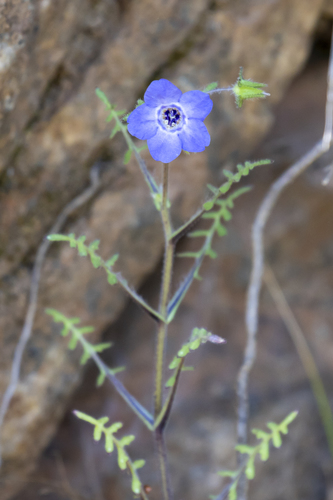
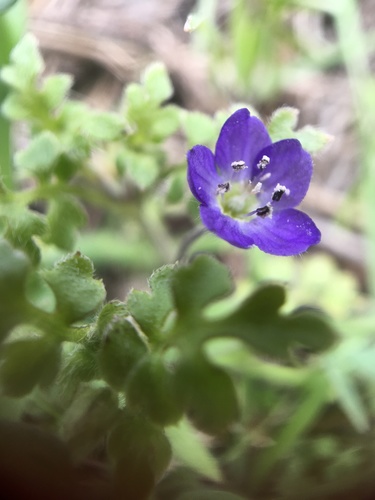
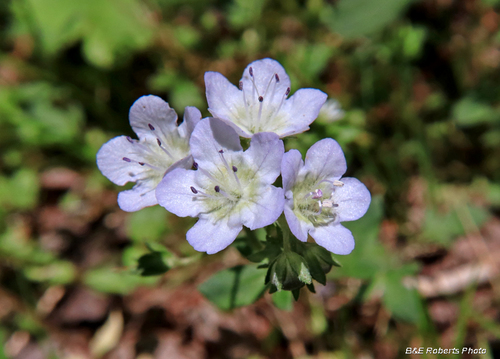
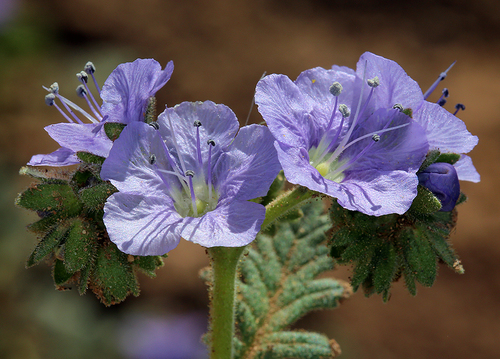
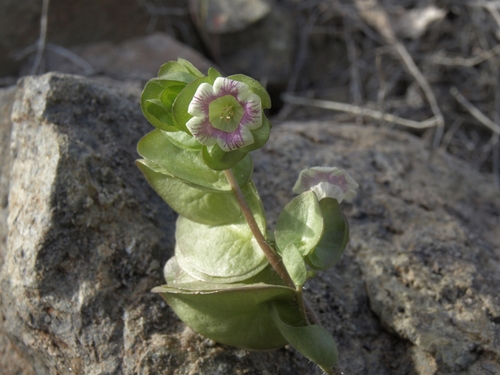
Tricardia is a monotypic genus of flowering plants in the family Hydrophyllaceae, containing only one species: Tricardia watsonii Torr. ex S.Watson. This species is commonly known as threehearts. It is native to the southwestern United States, growing in deserts and mountains in sandy open habitat, often growing beneath shrubs. It is a perennial herb that grows from a taproot and a woody caudex covered with the shreddy remains of vegetation from previous growing seasons. It produces several erect stems that reach up to around 40 centimeters tall. Most of its leaves grow in a basal rosette around the caudex. These leaves are lance-shaped, thinly coated with woolly hairs, up to 9 centimeters long, and grow on petioles. A small number of smaller leaves grow higher up on the stem. Flowers grow in a loose cyme at the top of the stem. Each flower has a calyx made of five sepals: the outer three are heart-shaped, ranging in color from green to pink or purple, while the inner two are much smaller and narrower. The flower inside the calyx is bell-shaped, white with central purple markings, and roughly half a centimeter wide. The fruit is a capsule that is just under a centimeter long and contains 4 to 8 seeds.