About Trapezites eliena (Hewitson, 1868)
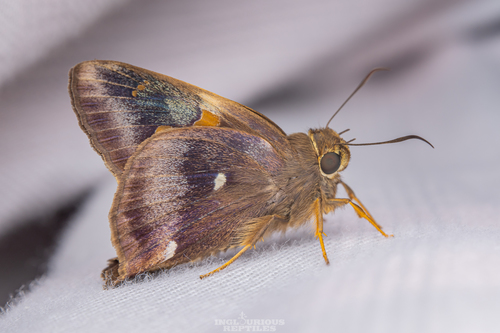
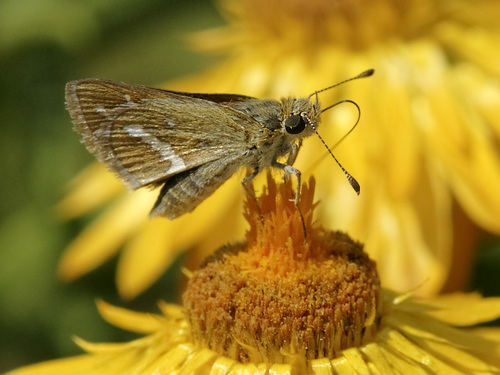
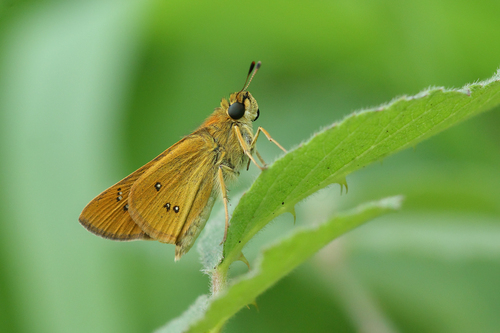
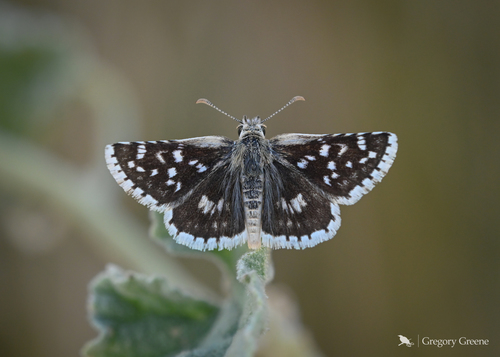
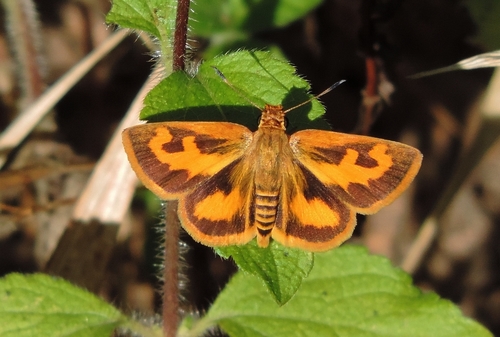
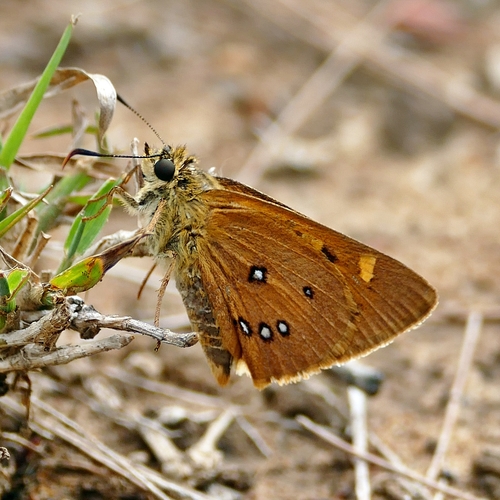
Adults of Trapezites eliena are brown on their upper wing surfaces and pinkish-brown on their lower wing surfaces, with yellow or orange wing markings, and a wingspan ranging from 33 to 37 mm (1.3–1.5 in). On the upper side of each forewing, there is a rectangular yellow blotch in the cell, two yellow postmedian spots, one yellow spot near the dorsum, an orange-yellow streak along the dorsum extending to the wing base, and a subapical band of three small yellow spots. On the upper side of each hindwing, there is a broad central orange band. On the lower side of each forewing, the central area from the dorsum to the wing base is dark brown, with yellow markings matching those on the upper wing surface. On the lower side of each hindwing, there is a central silver spot edged in black, plus four small postmedian brown spots with white centers. Eggs of this species are dome-shaped, white or cream in color, and develop irregular red bands over time. They measure approximately 1.2 mm (0.047 in) in diameter, with 19 to 20 longitudinal ribs. Mature larvae reach up to 36 mm (1.4 in) in length; they are pinkish-brown to greyish-green, with faint brown stripes and scattered small brown spots. Pupae are approximately 20 mm (0.79 in) long, brown, and mottled with darker brown spots.
Adult Trapezites eliena fly quickly, stay close to the ground, and land often on rocks and foliage. Males practice hilltopping and defend their established territories from other males. Females lay their eggs singly on host plants, which are multiple mat-rush species: Lomandra confertifolia, Lomandra filiformis, Lomandra longifolia, and Lomandra multiflora. After hatching, larvae build a shelter from silk and dead leaves. They rest inside this shelter during the day and emerge to feed at night. Larvae overwinter inside their larval shelters. Pupation takes place inside the larval shelter, usually near the base of the host plant. There is likely only one generation per year, with adults emerging mostly between November and January, though adult individuals have been recorded from October through March.