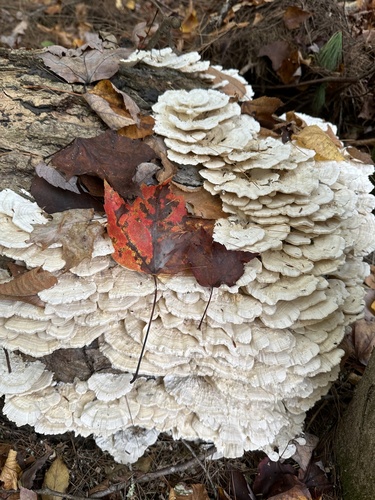
About Trametes pubescens (Schumach.) Pilát
Trametes pubescens is a small, thin species of polypore bracket fungus. It has a cream-colored, finely velvety cap surface. Unlike most other turkey tail-like Trametes species, its cap surface does not have strongly contrasting color zones. This is an annual saprobic fungus that acts as a decomposer of dead hardwood wood. It grows in clusters on logs, stumps, and downed branches, and is only rarely reported growing on conifer wood. It is purported to be a plant pathogen that infects peach and nectarine trees, and it is inedible. The genome of Trametes pubescens was published in 2017 by Zoraide Granchi and her coworkers from the OPTIBIOCAT project. The genome contains 39.7 million bases. The project consortium estimates the genome holds 14,451 distinct genes, which is an average number for saprobic wood-rotting fungal species. The genome sequencing work was carried out in Leiden, The Netherlands.