About Trametes ochracea (Pers.) Gilb. & Ryvarden
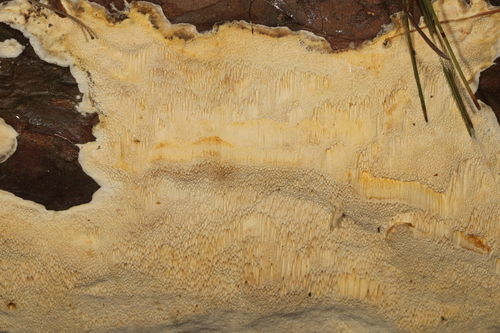
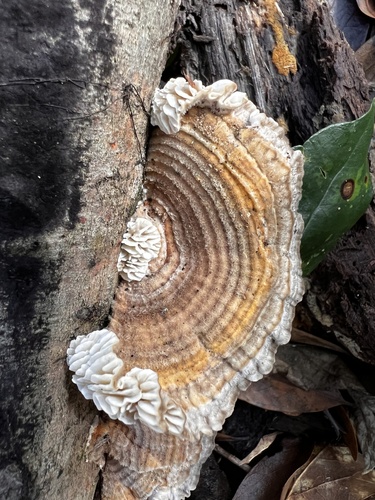
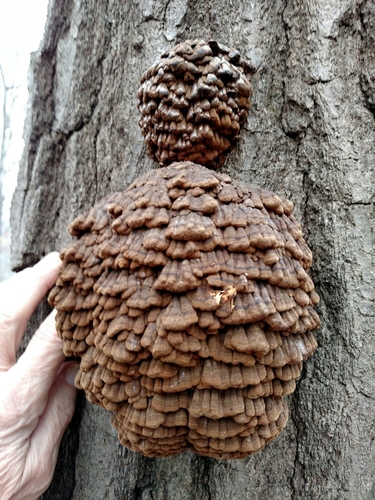
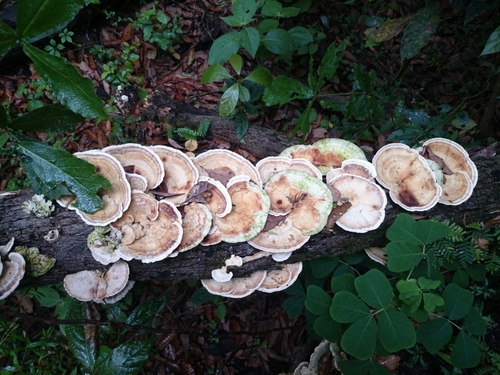
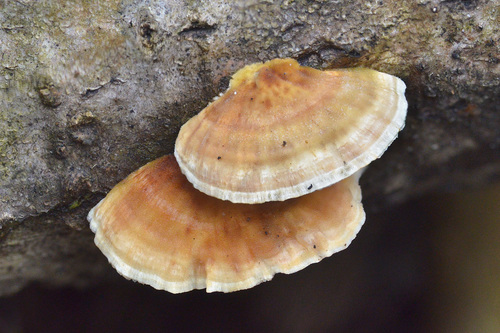
The fruiting body of Trametes ochracea is shaped similarly to that of Trametes versicolor: it is a rounded, shelf-like structure that may have a wavy edge, and it has no visible stalk. Its tough flesh measures 1–3 mm (0.04–0.12 in) thick overall, and can reach up to 5 mm (0.20 in) thick at the point where it attaches to substrate. The flat cap can grow up to 10 cm (3.9 in) across. The cap has concentric zones of fine hairs, and is colored ochre-yellow or orange. Unlike Trametes versicolor, Trametes ochracea has no black layer underneath the hairy tomentum that sits above its whitish flesh. Its pore layer is creamy ochre in color. Trametes ochracea is a white rot fungus that grows wild primarily on beech and oak wood. It degrades lignin from lignocellulosic materials including wood and wood products, which allows it to be cultivated. It is likely consumed by the same or similar insect species that eat Trametes versicolor, such as fungus moths, gnats, and the maggots of mushroom flies. Due to its leathery texture, Trametes ochracea is inedible to humans. Any confirmed medicinal value for the species is still pending, but a methanol extract of this fungus has demonstrated anti-inflammatory effects, and has also been shown to inhibit heat-induced hemolysis in red blood cells (erythrocytes). Certain strains of Trametes ochracea have been observed to produce pectinase, an enzyme that breaks down pectin.