About Trametes elegans (Spreng.) Fr.
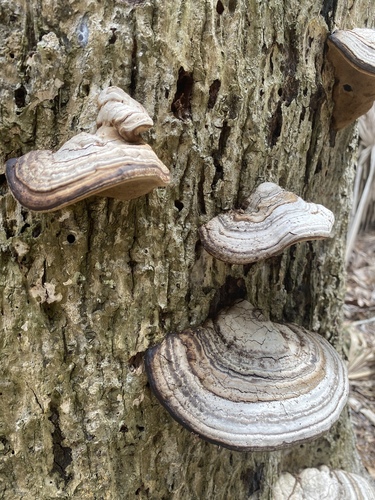
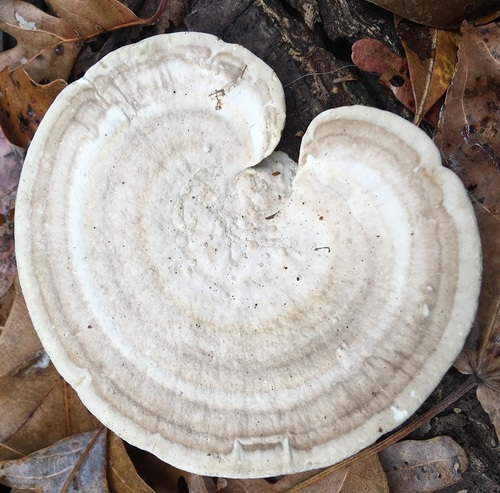
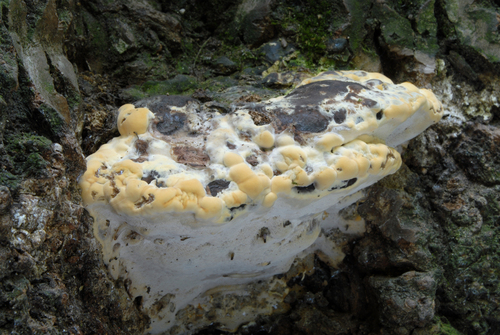
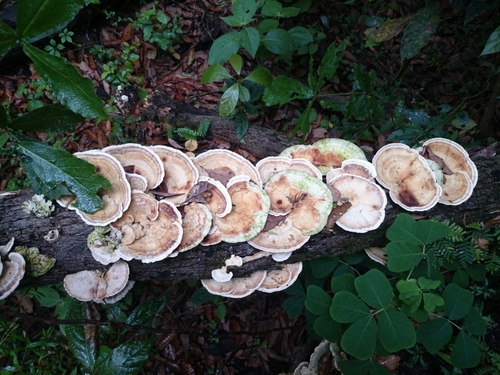
Trametes elegans (Spreng.) Fr. has the following morphological features. Its basidiocarp is brown, with narrow semi-dadeloid pores. The pore surface is yellow, and a dark line separates the lower context from the upper tomentum. Its defining characteristics are skeletal hyphae, thin-walled basidiospores, and a poroid hymenophore. It lacks a stipe, has a corky texture, and is circular, sessile, and flabelliform in shape. It is flexible when fresh and becomes more rigid as it dries. Its leathery fruiting body grows alone on dead wood. In secondary mycelial culture, it is off-white, velvety, and produces aerial hyphae. For habitat, T. elegans prefers an intermediate temperature range of around 25-35 °C, and can grow on both soil and synthetic media. It favours rotting wood and leaf litter in tropical hardwood forests. Geographically, T. elegans is most common in tropical hardwood forests, and has been recorded in West Africa, Australia, New Zealand, Japan, and the southern United States. Ecologically, T. elegans is an endophytic white rot fungus that forms a commensalistic relationship with various host plants, protecting hosts from invasion by other pathogens. As a white rot fungus, it breaks down tree lignin via extracellular, non-specific, non-hydrolytic processes, which plays an important role in carbon recycling in forest ecosystems.