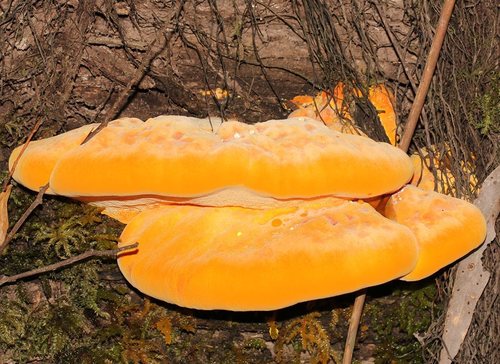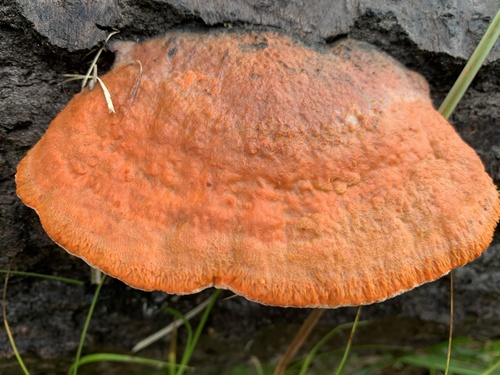
About Trametes cinnabarina (Jacq.) Fr.
Pycnoporus sanguineus (previously named Trametes cinnabarina (Jacq.) Fr.) has both industrial and medicinal uses around the world. A pigment called cinnabarin, extracted from its caps, is used in the textile industry to partially or completely decolorize certain dyes. Other industrial applications of this species include developing testing methods for wood treatment products, and producing enzymes used in bioremediation to break down crude oils. Native populations in regions where the species grows were the first to use it for traditional medicine. Medicinally, Pycnoporus sanguineus helps relieve symptoms associated with arthritis, gout, styptic issues, sore throats, ulcers, toothaches, fevers, and hemorrhages. The species also shows multiple antibacterial properties against Escherichia coli, Klebsiella pneumoniae, Pseudomonas aeruginosa, Salmonella typhi, and Staphylococcus aureus, working by inhibiting specific metabolic pathways. In modern medicine, Pycnoporus sanguineus is used to absorb certain heavy metals found in the bloodstream.