About Tramea lacerata Hagen, 1861
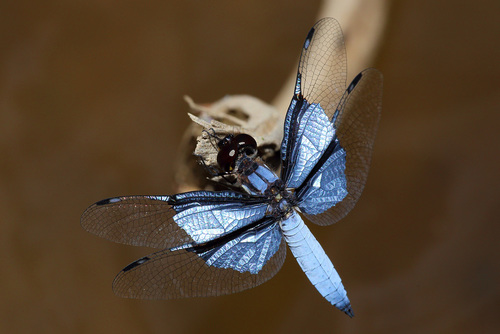
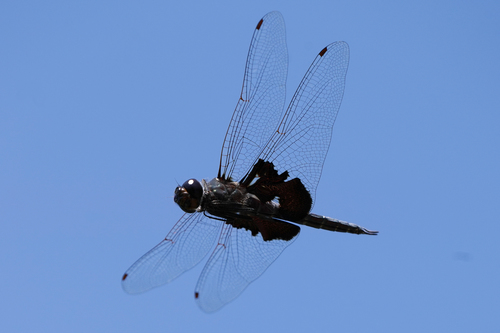
Black saddlebags (Tramea lacerata, scientific name Tramea lacerata Hagen, 1861) is a species of skimmer dragonfly found throughout North America. It has distinctive wings that have characteristic black blotches at their proximal ends, which give the dragonfly the appearance of wearing saddlebags. This is a relatively large dragonfly, reaching about 5 centimetres (2 inches) in length. Its body is thin and black; females may have lighter spotting or mottling on their dorsal side. The head of the black saddlebags is much wider than the rest of its body and is dark brown in color. This dragonfly can be found near stagnant bodies of water such as ponds and ditches. Like all dragonflies, Tramea lacerata pairs mate in the "wheel" position. A female mates only once and stores all the sperm she needs for fertilization. If she mates a second time, the second male will remove sperm from the first male from her body using a brush-like apparatus on his specially adapted penis. During egg laying, the male releases the female to allow her to drop down to the water to release some eggs, after which she returns to be held by the male's claspers. When the larvae hatch, they eat any prey they can catch, following a carnivorous diet made up of organisms smaller than themselves. Adult black saddlebags, especially males, gather in swarms. Some populations of this dragonfly migrate. Both larval and adult forms are efficient predators of mosquitoes, so this species is considered a helpful insect in wet areas prone to mosquito infestations.