About Tragia betonicifolia Nutt.
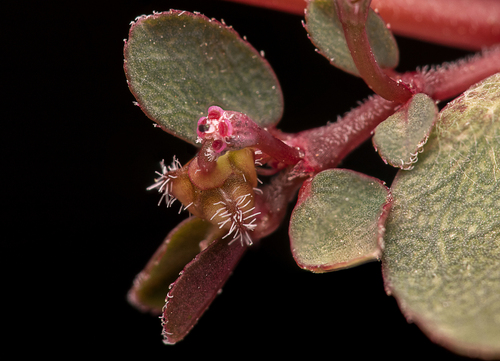
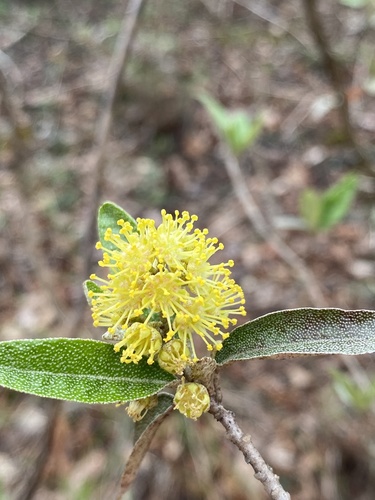
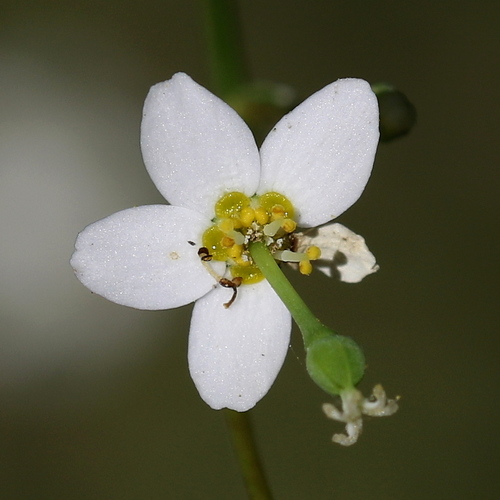
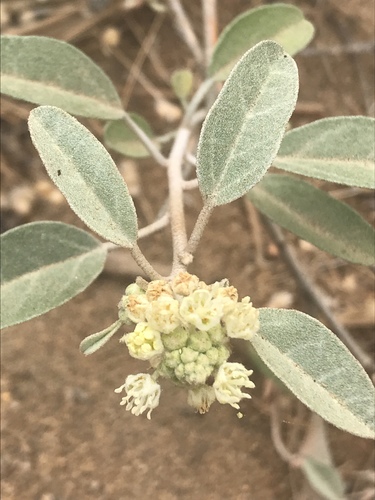
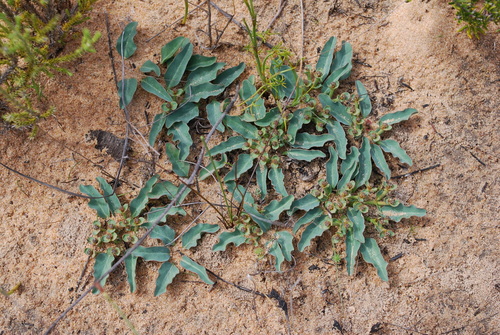
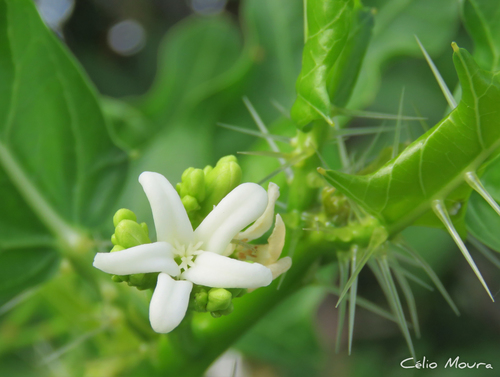
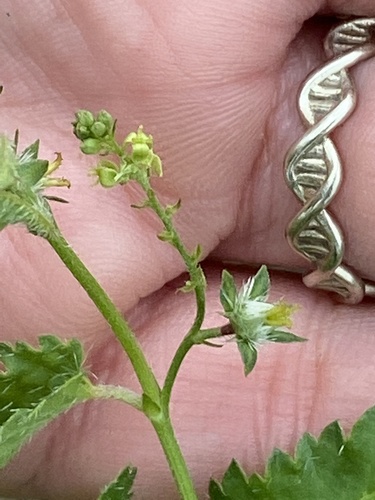
Tragia betonicifolia, commonly known as betonyleaf noseburn, is a species of flowering plant in the spurge family, Euphorbiaceae. This species is native to North America, where it occurs primarily in the South-Central United States, with a range extending north into Kansas and Missouri, and isolated disjunct populations located further east in Tennessee. Its typical natural habitat consists of dry areas with sandy or rocky soil, including glades, prairies, bluffs, and dry woodlands. Tragia betonicifolia is a perennial herb or subshrub. Its leaves are shaped triangular-lanceolate, with a base that ranges from truncate to cordate, and an acute leaf tip. Its petioles measure approximately 10–40 mm long. It produces small yellow flowers from late spring through summer. Tragia betonicifolia can be told apart from the visually similar species Tragia urticifolia by two key features: it has shorter pedicels on staminate flowers, where the persistent base only reaches 0.6 mm, and its flowers are clustered more distally within the raceme. Additionally, Tragia betonicifolia typically grows more branches from the base of its stem. This species has stinging hairs that cause pain when touched.