About Tradescantia pallida (Rose) D.R.Hunt
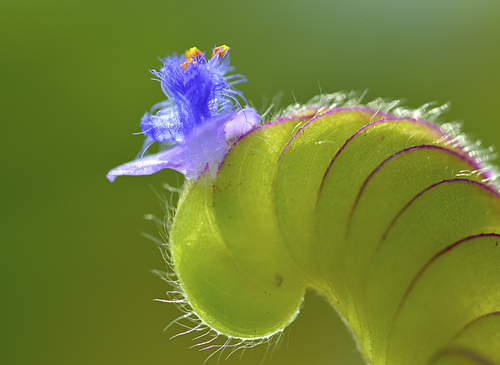
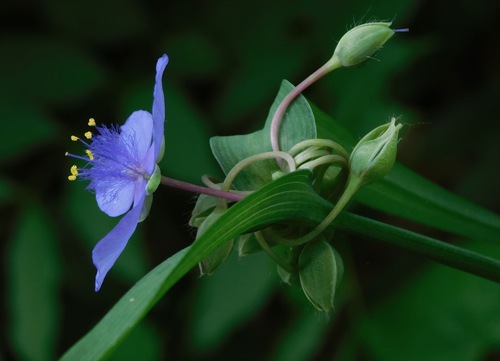
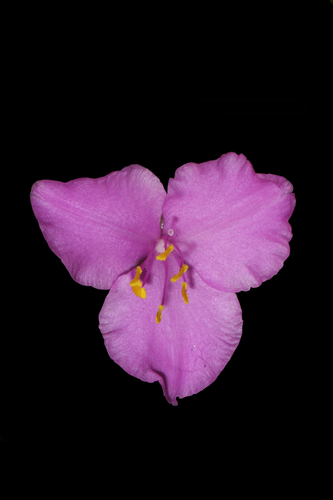
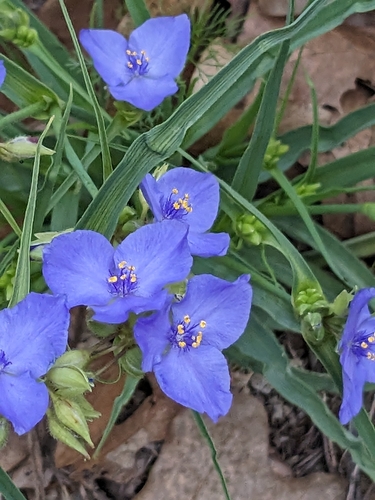
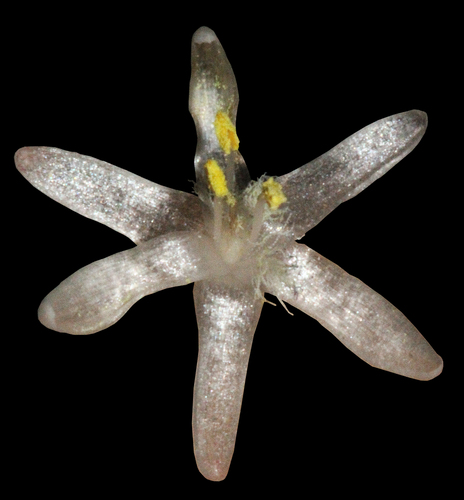
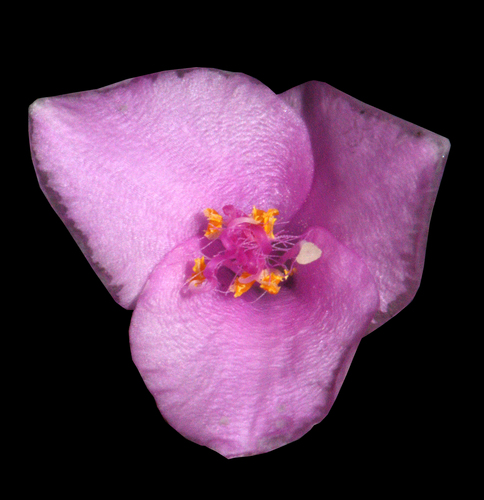
Tradescantia pallida (Rose) D.R.Hunt is a perennial herbaceous plant with a rambling growth habit. Plants reach roughly 1 foot (30 cm) in height, but spread much wider, with trailing stems that can grow to 18 inches (46 cm) or longer. Wild specimens have a muted, washed-out blend of gray-green and purple coloring. Its fleshy, hairy leaves grow up to 7 inches (180 mm) long, are narrow-oblong and V-shaped, and form a sheath around the plant’s fleshy stems, which break off easily. Relatively inconspicuous three-petaled flowers, typical of the Tradescantia genus, grow at the ends of stems. Flowering is most abundant from midsummer through fall, and occurs sporadically at other times of year; flowers only open in the morning. This species is evergreen, but in colder regions it dies back to the ground in winter and resprouts from its roots in spring. In its native range, Tradescantia pallida grows along the Gulf of Mexico coast, spanning from Tamaulipas to Yucatan. It has been collected in tropical deciduous forest, among roadside limestone rocks, and on limestone outcrops. Tradescantia pallida is cultivated as an ornamental plant valued for its attractive foliage. Only the cultivar 'Purpurea', which has purple-violet leaves and stems, is grown commercially. This cultivar is sometimes sold under the common name 'Purple Heart', and has received the Royal Horticultural Society's Award of Garden Merit. It is a popular groundcover in tropical and semi-tropical areas. In temperate climates, it has traditionally been grown as a houseplant, but is increasingly planted outdoors in containers or as a groundcover. It is also well-suited for hanging baskets, border fronts, and rock gardens. It is hardy down to USDA zone 7. While it can grow in shade, the most intense purple foliage color develops when grown in full sun. This plant tolerates both drought and frequent watering easily. It is generally free of significant pest and disease issues, though slugs and caterpillars may attack young shoots of outdoor-grown specimens, and aphids and scale should be monitored for on indoor houseplants. Tradescantia pallida has been shown to be useful for phytoremediation, biomonitoring, and genotoxicity assessment of environmental pollutants, particularly heavy metals and metalloids originating from coal power plants. As a houseplant, it is rated as exceptionally effective at improving indoor air quality by filtering out volatile organic compounds, a common class of pollutants and respiratory irritants. Because it contains anthocyanins, its leaves have been used as food colorants and food preservatives.