About Tozzia alpina L.
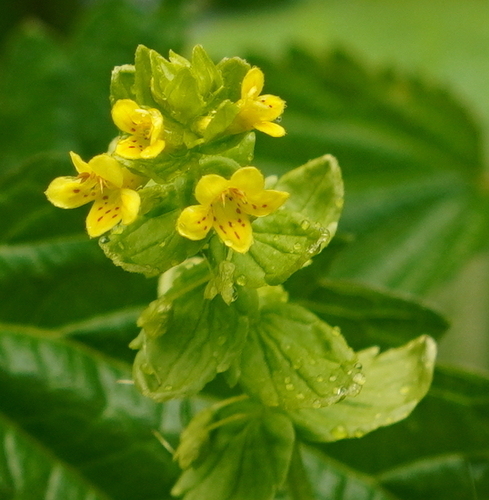
Tozzia is a monotypic genus of flowering plants in the broomrape family Orobanchaceae, containing only one species: Tozzia alpina L. This species has a unique life cycle that combines two forms of parasitism: it is a holoparasite during its young vegetative stage, and becomes a hemiparasite when it reaches its flowering stage. The natural distribution of Tozzia alpina stretches from the Pyrenees and Alps to the Balkans and Carpathians. Tozzia alpina is classified as a geophyte. In its first year of growth, it feeds as a holoparasite on large-leaved herbaceous plants from genera including Rumex, Adenostyles, and Petasites. From its second year onward, it acts as a hemiparasite: it carries out its own photosynthetic assimilation, but still obtains additional nutrients from its host plant. It grows best at altitudes between 800 and 2600 meters; in the Allgäu Alps, it has been recorded growing up to 2200 meters on Linkerskopf in Bavaria. It favors lime-rich, nutrient-rich, wet-fresh to moist clay soils located on northern-facing slopes.