About Toxicoscordion fontanum (Eastw.) Zomlefer & Judd
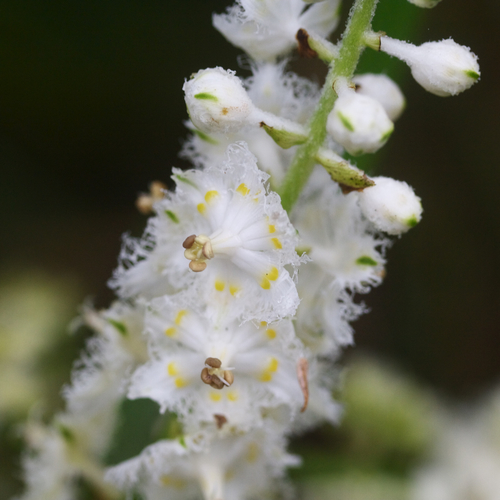
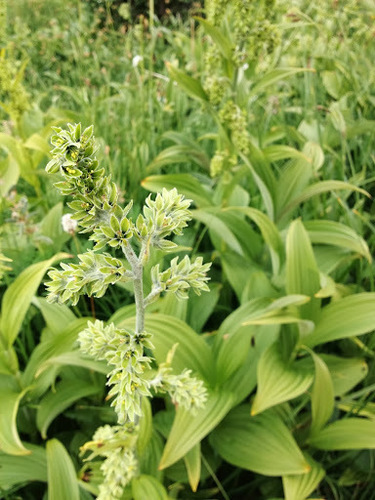
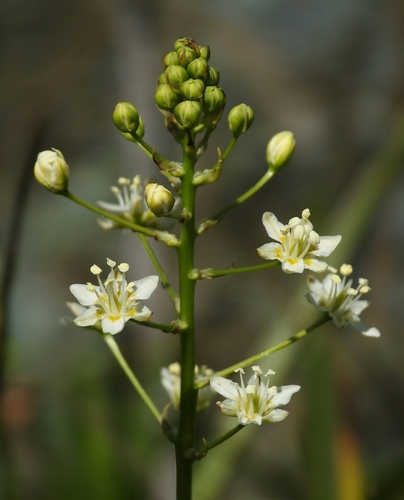
Toxicoscordion fontanum, commonly known as small-flower death camas, is a rare plant species that is only known to grow in serpentine marshes in California, United States. Its primary range is within the Coast Ranges, spanning from Mendocino County to San Luis Obispo County; there is also an additional report of an isolated population in the Sierra Nevada foothills of Kern County, east of Bakersfield. Toxicoscordion fontanum is a bulb-forming perennial herb. Its bulbs are egg-shaped, not clumped together, and can grow up to 40 mm (1.6 inches) long. Its inflorescences are paniculate, and may sometimes bear as many as 100 flowers. The tepals are cream-colored and grow up to 12 mm (0.5 inches) long, and the filaments are shorter than the tepals. Species that specialize in growing on serpentine soil are not uncommon. Scattered pockets of this soil occur across parts of California, Oregon, and other regions. Serpentinite, a metamorphic rock that forms serpentine soil, develops deep below the Earth's surface before being pushed upward by geologic activity. Soils derived from this rock are typically low in nutrients like nitrogen, potassium, and phosphorus, but high in nickel and chromium. These conditions are toxic to most plant species, but some species including T. fontanum have evolved adaptations that allow them to tolerate serpentine soils. Like many other species that were formerly classified in the genus Zigadenus, T. fontanum is highly toxic and potentially lethal to both humans and livestock. Cases of poisoning have occurred when people confused this species with wild onion (Allium spp.), despite the fact that Toxicoscordion fontanum does not have the characteristic onion scent found in Allium species.