About Toxicodendron vernix (L.) Kuntze
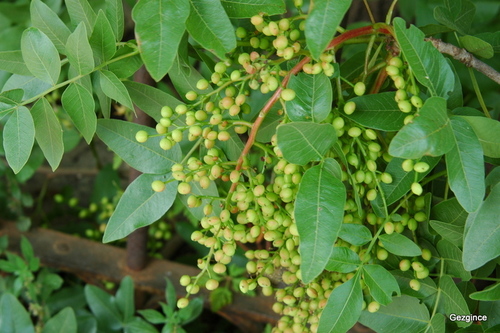
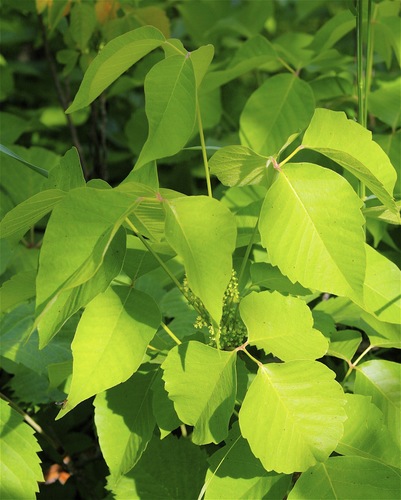
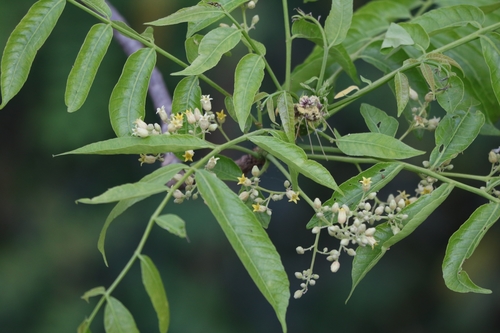
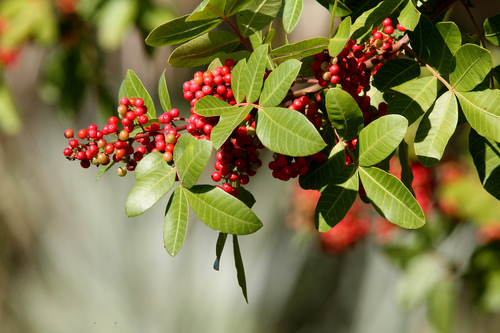
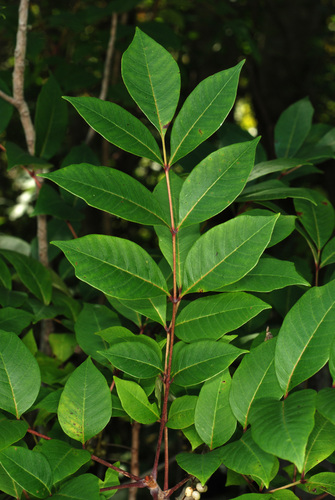
Poison sumac, scientifically Toxicodendron vernix (L.) Kuntze, grows as a shrub or small tree reaching up to almost 9 metres (30 feet) in height. Each of its pinnate leaves holds 7 to 13 leaflets, each 5–10 centimetres (2–4 inches) long. Leaflets are oval to oblong in shape, acuminate (tapering to a sharp point), cuneate (wedge-shaped) at the base, and undulate (wavy-edged). The underside of each leaflet is either glabrous (hairless) or slightly pubescent (covered in fine down-like hair). The petiolules (stems connecting leaflets to the leaf stalk) are red, and the leaves themselves often carry a reddish tint, especially toward the top of the plant. Young poison sumac bark is light gray, and darkens as the tree ages. Its greenish flowers grow in loose axillary panicles (clusters) that are 8–20 cm (3–8 in) long. The fruits are subglobose (not perfectly spherical), whitish-gray, flattened, and roughly 0.5 cm (1⁄4 in) across; these fruits are eaten by birds. Poison sumac fruits are creamy white, grow in clusters, and typically measure 4 to 5 millimetres (5⁄32 to 3⁄16 in) across. Poison sumac grows exclusively in wet clay soils, most commonly in swamps and peat bogs, located in the eastern United States and extreme southeast Canada. Both the fruit and leaves of poison sumac contain urushiol, an oil that causes an allergic rash when it contacts human skin. This plant is not toxic to birds or other animals, which will eat its fruits when other food sources are scarce, especially in winter. When it comes to causing urushiol-induced contact dermatitis, poison sumac is more toxic than its close relatives poison ivy and poison oak. This difference in toxicity between the three plants comes from differences in the side chains of their urushiol chemicals. Typically, poison ivy urushiol has a C15 side chain, poison oak has a C17 side chain, and poison sumac has a C13 side chain. The contact dermatitis caused by poison sumac appears as painful, long-lasting swellings and skin eruptions. In the most severe cases, inhaling smoke from burning poison sumac can cause life-threatening pulmonary edema, where fluid builds up in the alveoli of the lungs.