About Toxicodendron pubescens Mill.
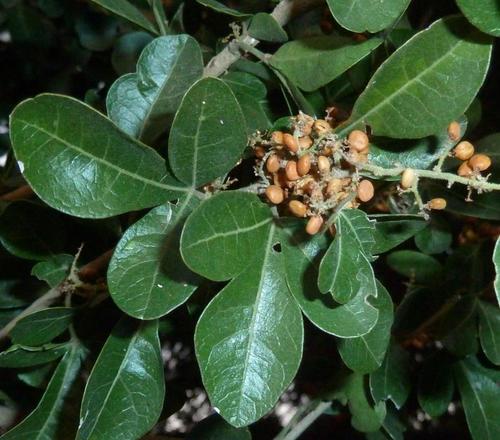
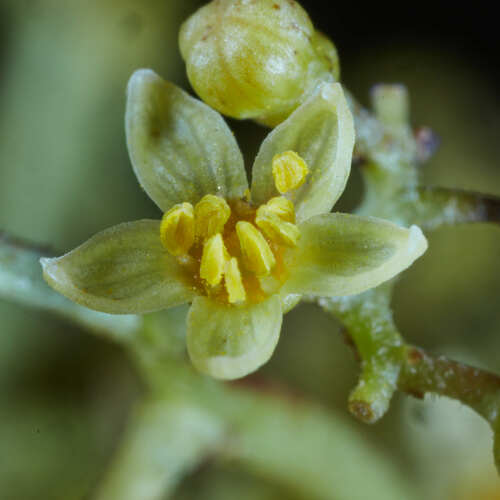
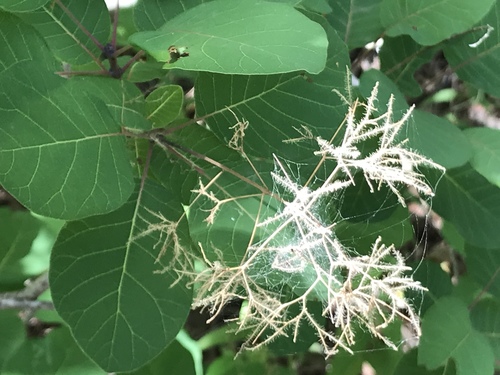
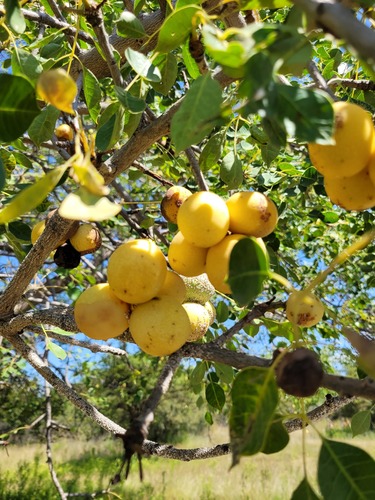
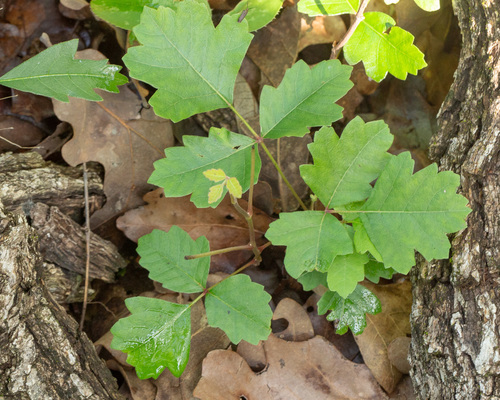
This shrub species grows 0.6 to 1.2 metres (2 to 4 ft) tall. Its leaves are 15 centimetres (6 inches) long, arranged in an alternate pattern, and each leaf has three lobes. The lobes are usually hairy, and they vary in size and shape, but most often resemble leaves of the white oak; they typically turn yellow or orange in autumn. Yellow flowers of this species bloom from March to April. Its fruit is approximately 1⁄4 inch (6.4 mm) wide and is greenish white in color. This species is native to the Southeastern United States, ranging from Virginia west to Texas and Oklahoma. It can be found growing in forests, thickets, and dry, sandy fields. All parts of this plant contain urushiol, which can cause severe dermatitis in sensitive individuals. The risk of exposure can be reduced by learning to recognize and avoid this species, and by wearing clothing that covers the legs and arms. Any clothing that has become contaminated with plant material should be laundered before it is handled or used again. The health effects caused by this poison oak are similar to those caused by its close relative poison ivy: it causes severe itching, inflammation, and blistering.