About Toona ciliata M.Roem.
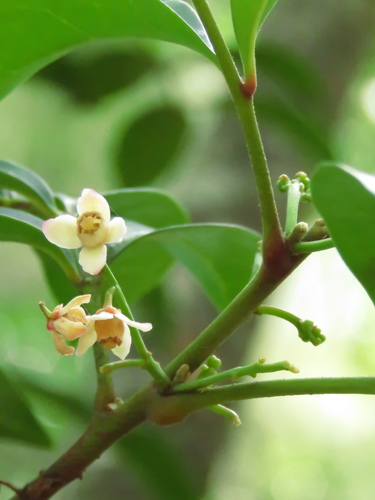
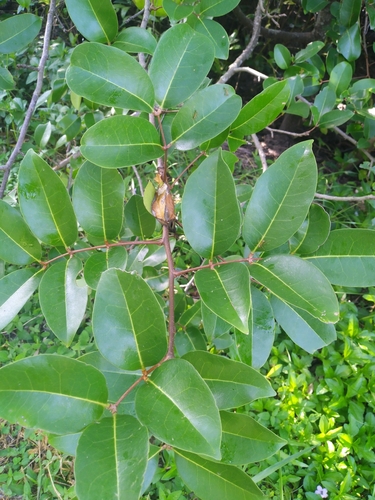
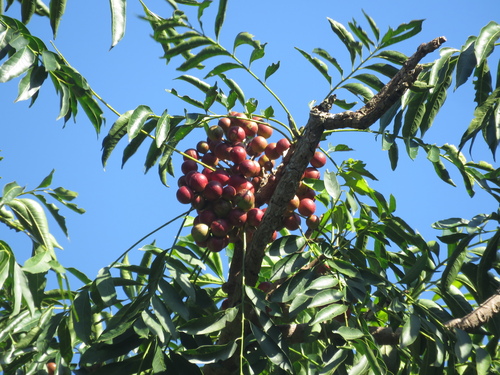
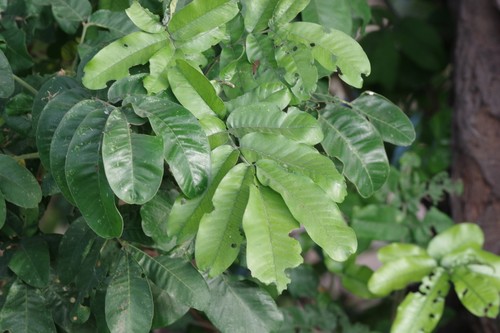
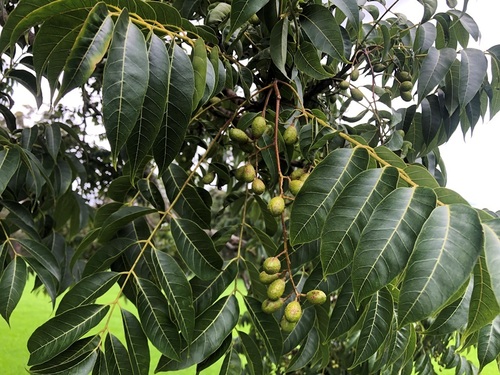
This tree has large compound leaves that reach up to 90 cm in length, bearing 10 to 14 pairs of narrow leaflets that taper toward their tips. Each individual leaflet measures between 4.5 and 16 cm long. Toona ciliata M.Roem. can grow to around 60 m (200 ft) in height, with a trunk that reaches up to 3 m (10 ft) in girth; large branches form a wide, spreading crown. It is one of the few native deciduous trees in Australia: its leaves drop in autumn, around late March, and regrow in spring, around early September. New leaf growth is reddish pink. The tree produces large quantities of very small, tubular white flowers. Its fruits are green capsules that turn brown as they ripen, then split open into a star shape to release small, winged seeds.
In Australia, the natural habitat of this tree is subtropical forest in New South Wales and Queensland, and much of this native habitat has been extensively cleared. The Australian population of the species was previously classified as a separate species under the name Toona australis. The southern edge of its natural distribution lies on basaltic soils west of the Princes Highway, near the village of Termeil, which is located south of Ulladulla in the southern Illawarra region of New South Wales. It also grows naturally on Norfolk Island. The largest recorded T. ciliata tree in Australia grew near Nulla Nulla Creek, west of Kempsey, New South Wales, and was felled in 1883. It grows best in high-light environments, but is less prone to attack by the cedar tip moth when growing in the lower light of a rainforest understorey. The cedar tip moth lays eggs on the tree's leading shoot, so its larvae can burrow into the stem. This causes dieback, resulting in a multi-branched tree with very little commercial value. The tree produces a chemical that attracts female cedar tip moths. This moth does not attack commercial plantings of Meliaceae from Asia, Africa, or Australia that are grown in South America. As a result, successful cultivation of Toona ciliata has been recorded in many parts of Brazil, including genetic improvement work and clonal production.
Toona ciliata reproduces via seed. It is a prolific seed producer and establishes new growth readily. Its timber is red in colour, easy to work with, and highly valued. It was heavily used for furniture, wood panelling, construction including shipbuilding, and was called "red gold" by Australian settlers. It was heavily and unsustainably harvested through the 19th and early 20th centuries, and nearly all large original trees have been cut down. The species is effectively commercially extinct, and its timber is now limited in availability. Currently, this timber is also harvested in New Guinea. While it is not generally a viable plantation species, trees are regularly harvested by forestry operations in the Atherton region of Queensland.