About Tomostima cuneifolia (Nutt.) Al-Shehbaz, M.Koch & Jordon-Thaden
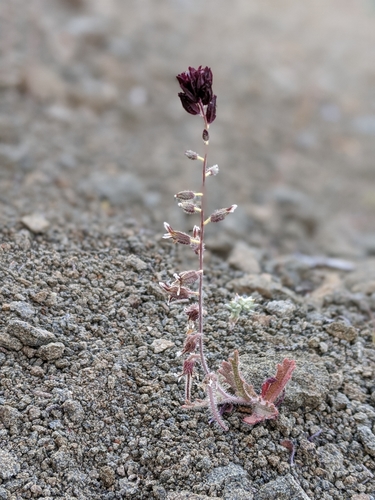
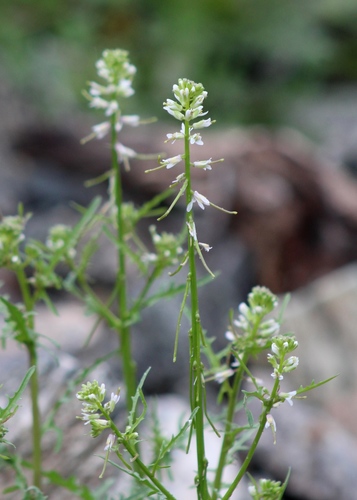
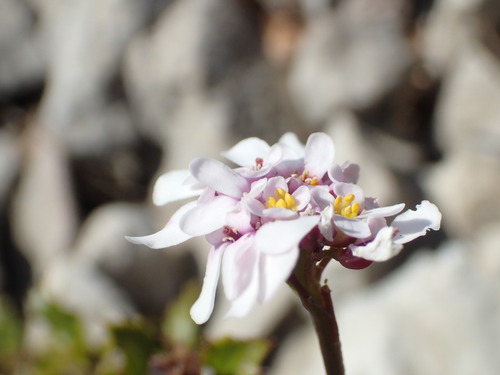
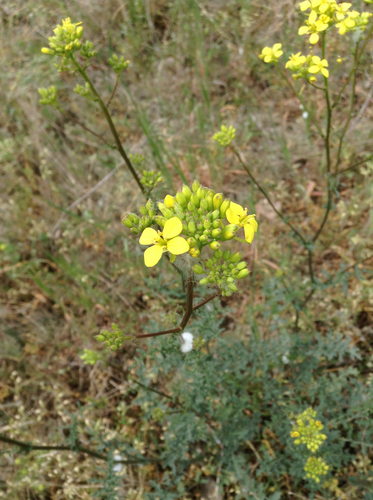
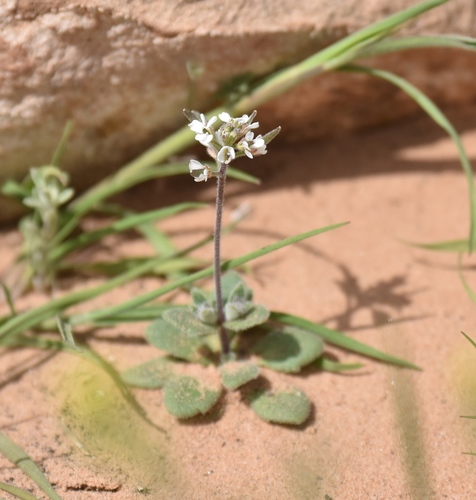
Tomostima cuneifolia, also known by the synonym Draba cuneifolia, is a species of flowering plant in the mustard family Brassicaceae. It is commonly called wedgeleaf draba or wedgeleaf whitlow-grass. This is an annual plant, native to the southern United States, Baja California, and northern Mexico, where it grows in open rocky fields and other disturbed areas. The plant forms a basal cluster of thick, widely toothed leaves that are covered in stiff hairs. It produces one or more erect stems that can reach a maximum height of close to 40 centimeters. Each hairy stem bears an inflorescence of up to 75 small white flowers; new flowers continue to develop at intervals down the stem as the stem grows taller. Members of the Brassicaceae family (also historically called Cruciferae) are easily recognizable by their 4 petals and 4 sepals, arranged in a cross shape that can look like an X or an H, which gives the family its older name Cruciferae meaning cross-bearer. Mustard plants typically have 6 stamens, most often 4 longer and 2 shorter. Their fruits are either a long thin silique, or a short, often rounded silicle.