About Todiramphus sacer (J.F.Gmelin, 1788)
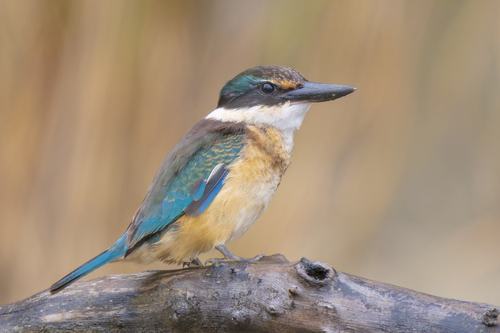
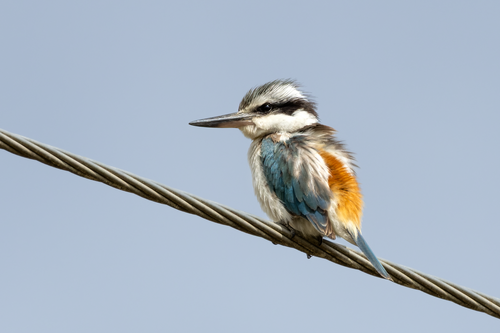
The Pacific kingfisher, scientific name Todiramphus sacer (J.F.Gmelin, 1788), is a medium-sized tree kingfisher. It is typically around 25 cm (9.8 in) long, has a wingspan of roughly 35 cm (14 in), and weighs between 51 to 100 g (1.8 to 3.5 oz). It has striking blue-green plumage, white underparts, and a distinct orange bill. This species produces a range of calls that vary by geographic location. Its most typical call is loud, harsh, and metallic, and is repeated multiple times. It is most commonly found in coastal areas, especially mangrove swamps. It also lives in farmland, open woodland, grassland, and gardens. It is usually found further inland than the collared kingfisher, which it was previously considered to be the same species as, and can range into forests or mountain areas. Pacific kingfishers often perch visibly on wires, rocks, or bare branches. On Pacific islands, this species is usually common across many coastal and inland habitats, with different subspecies found on the Solomon Islands, Vanuatu, Fiji, Tonga, and American Samoa. In coastal regions, small crabs are this kingfisher's preferred food, but it eats a wide variety of other animals including insects, worms, snails, shrimps, frogs, lizards, small fish, and sometimes other small birds and their eggs. The bird perches almost motionless for long periods while waiting for prey. When it spots prey, it glides down to catch it, then flies back to its perch. Larger prey items are pounded against the branch to subdue them. Any indigestible remains are regurgitated as pellets.