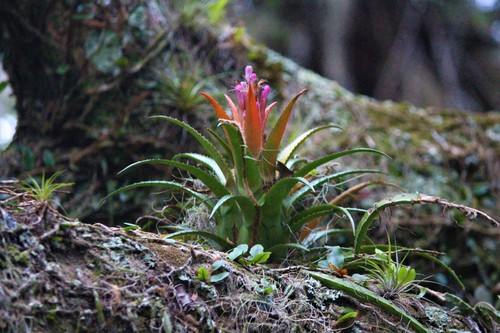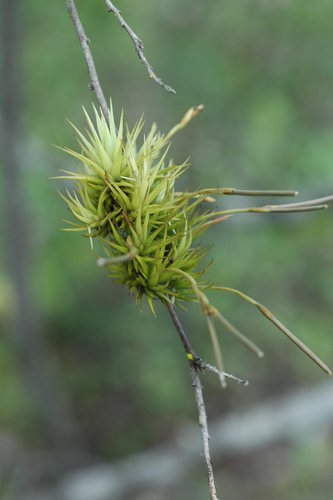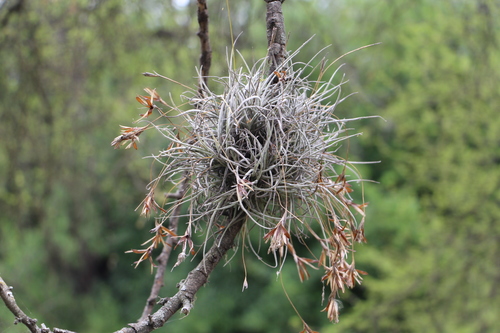
About Tillandsia recurvata (L.) L.
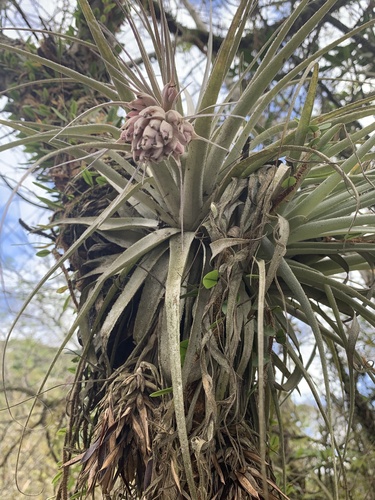
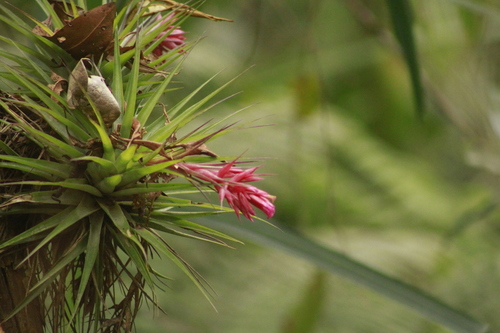
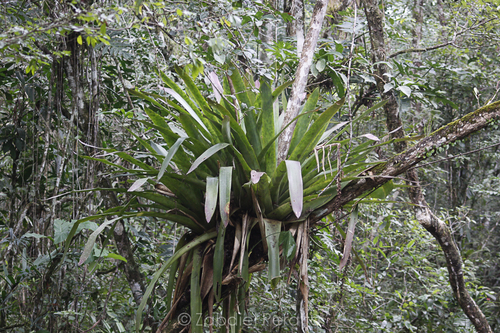
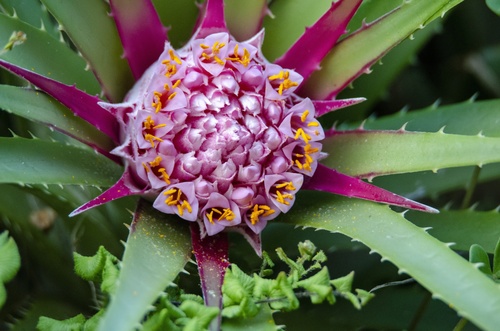
Tillandsia recurvata (L.) L., commonly called small ballmoss or ball moss, is a flowering epiphytic plant in the Bromeliaceae family — it is not a true moss. It grows on larger host plants, thriving in conditions of low light, low airflow and high humidity that are most often provided by southern shade trees, particularly the southern live oak Quercus virginiana. Like its relative Spanish moss and unlike parasitic mistletoe, ball moss is an epiphyte. It only uses its host for physical support, rather than gaining nutrition from it: ball moss produces its own food via photosynthesis, absorbs water that collects on its leaves, gets nitrogen from bacteria, and takes up most other minerals from wind-blown dust. Though it is not a harmful parasite that feeds on host sap the way mistletoes do, ball moss can compete with its host tree for sunlight and some nutrients, and it can restrict surface area available for new branch sprouts. However, it rarely causes any noticeable impact on the host tree’s growth or health unless the host is already stressed, such as in some urban environments. In growth habit, Tillandsia recurvata typically forms a spherical clump ranging in size from a golf ball to a soccer ball. This clump is actually a group of multiple connected smaller pups growing together. Multiple studies indicate that wind is the main agent of ball moss seed dispersal. There is no empirical evidence that T. recurvata can spread via animal-mediated dispersal vectors like epizoochory or endozoochory. Mature ball moss seeds have no visible adhesive on their outer surface, and very little stored nutrients to support sprouting. Like the seeds of many other epiphytes, they are produced in large quantities, and have fine straight hairs that can adhere to wet or clinging surfaces such as rough bark. This adhesion gives seedlings enough time to anchor themselves with their roots. Ball moss grows abundantly not just on tree hosts, but also on fences and telephone wires alongside occasional other plant species. It is sensitive to freezing temperatures, especially when moist. Ball moss is native to warmer regions of the Americas, with a distribution that extends from the southern United States down to northern Argentina and Chile. The northern edge of its natural native range is coastal Georgia, where it is classified as a state Special Concern species. It has been introduced to coastal South Carolina on landscaping trees. It has been recorded growing naturally in Georgia, Florida, Louisiana, Texas, Arizona, Mexico, most of Central and South America, and many islands of the West Indies. Some people in the United States consider ball moss visually unappealing, so many landowners use various chemical solutions to remove the bromeliads from their trees. Ball moss can be used as animal fodder. The Pima people of Mexico occasionally eat the flowers of T. recurvata and T. erubescens because they have high sugar content.