About Tillandsia paucifolia Baker
Scientific Classification
Tillandsia paucifolia, commonly called the potbelly airplant, is a bromeliad species belonging to the genus Tillandsia.
Native Range
It is native to Central America, central and southern Mexico, Venezuela, Colombia, the West Indies, and Florida.
Growth Arrangement
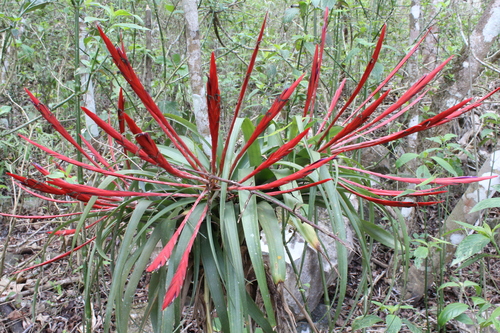
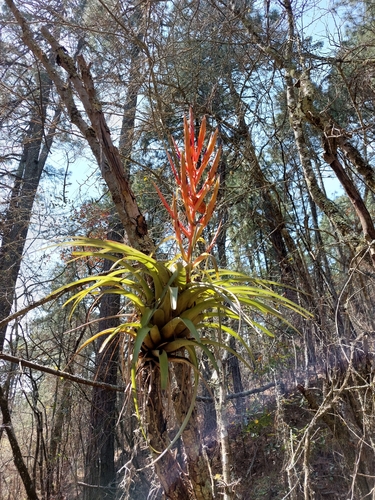
This species can grow either individually or in clusters, and typically produces between five and ten leaves per plant.
Leaf Characteristics
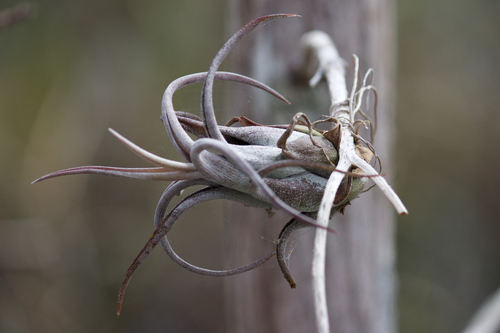
Its leaves are short with tapered ends, and range in color from light green to silver-gray.
Bulbous Base
A defining feature that sets T. paucifolia apart from other Tillandsia species is its large bulbous base.
Trichome Function
The leaves are covered in trichomes, hair-like structures that increase leaf surface area to maximize nutrient and water absorption directly from the air.
Trichome Density
The trichomes of this species are particularly large and abundant.
Flower Color
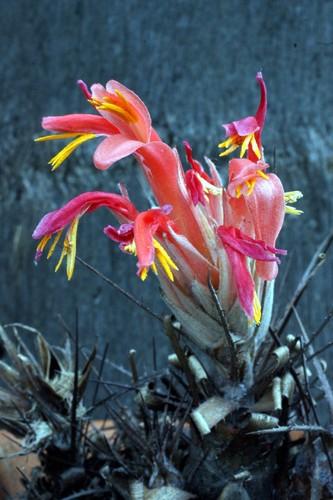
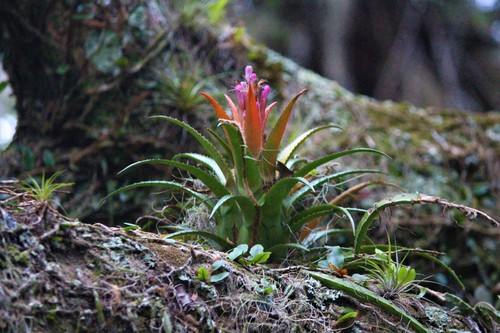
As an angiosperm, T. paucifolia produces flowers that range in color from pale pink to lavender-blue.
Pollination Type
This species is an epiphyte pollinated by animals.
Pollinator Species
Diurnal (daytime) pollinators include bees, beetles, and hummingbirds, while moths and bats have been reported to pollinate this species at night.
Pollination Reward
To reward the animals that facilitate pollination, these angiosperms sometimes produce nectar.
Pollination Benefits
More frequent visits from animal pollinators increase the chance that T. paucifolia receives pollen with greater genetic variation, which results in higher quality seeds.