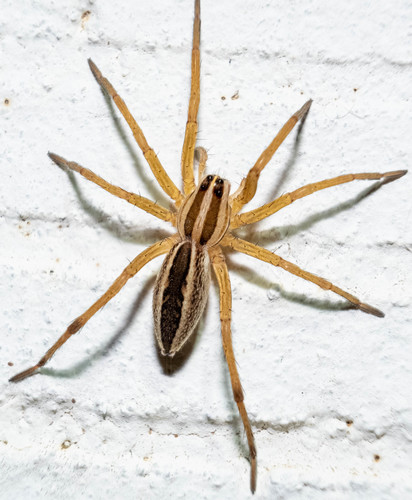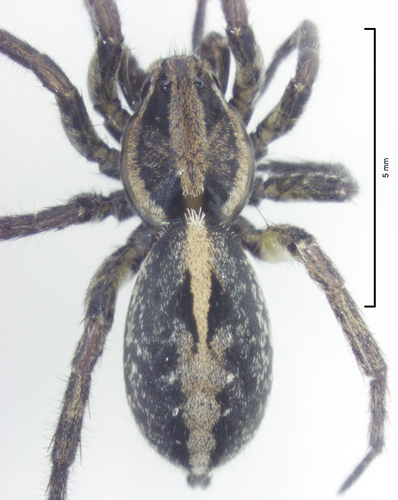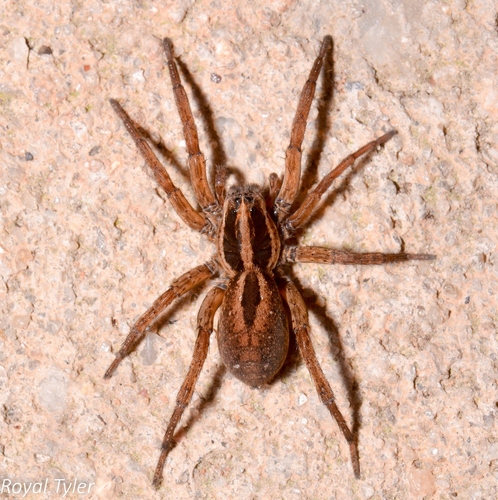
About Tigrosa annexa (Chamberlin & Ivie, 1944)
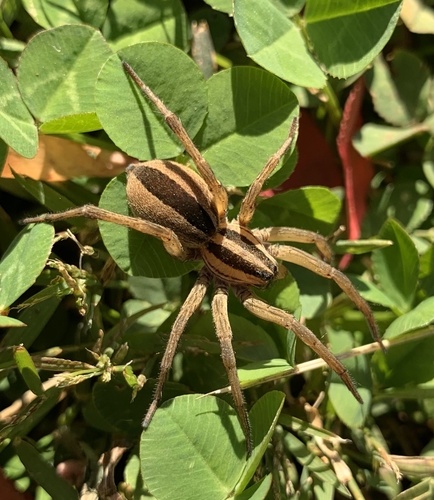
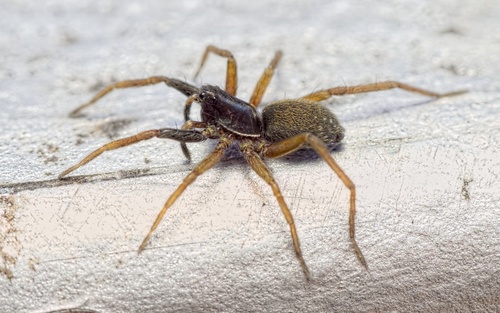
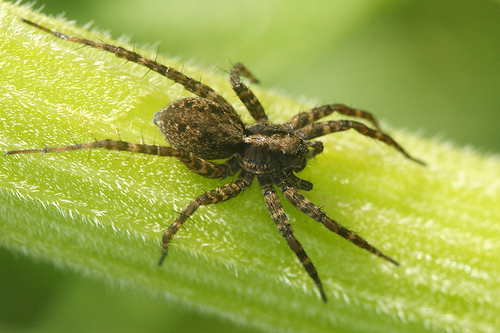
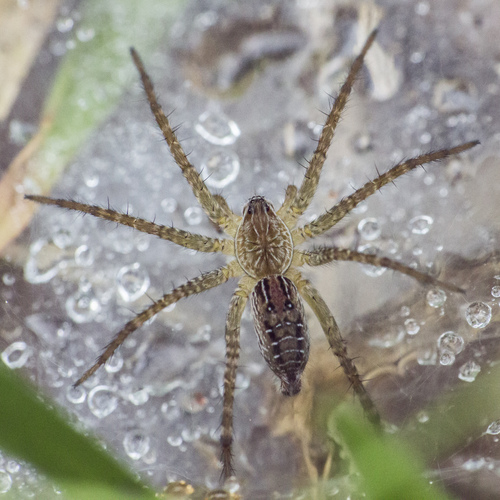
This species is scientifically named Tigrosa annexa, first described by Chamberlin & Ivie in 1944. Among male specimens measured in Mississippi, the average total body length is 26.17 millimeters, with a range of 21.3 to 32.1 millimeters. Females are smaller, with an average total length of 17.96 millimeters, ranging from 16.5 to 20.0 millimeters. Tigrosa annexa has two distinct dark brown to black bars on the dorsal side of its cephalothorax, and lighter yellowish gray lines are often present on each side of these bars. It can be distinguished from two closely related species, Tigrosa helluo and Tigrosa georgicola, by the presence of two white dashes positioned behind the posterior median eyes. A research study conducted in Everglades National Park found that Tigrosa annexa is most abundant in tropical hardwood hammock forests with xeric or limestone soils. This species prefers grassy substrates over sandy ones, as grass allows it to better camouflage in its environment. Tigrosa annexa preys on small invertebrates, including may beetles and mole crickets. It is hunted and eaten by larger spiders and spider wasps. As a wolf spider, Tigrosa annexa follows a characteristic reproductive process. During the pre-emergence stage, females carry their egg sacs suspended from their spinnerets, instead of building a web to hold eggs like many other spider species. The post-emergence stage starts 4 to 6 weeks after egg carrying, when the female tears open the egg sac to allow spiderlings to emerge. After emerging, the young offspring stay on the mother’s back for 1 to 2 weeks before dispersing away. Female Tigrosa annexa produce a small number of relatively large offspring. A female’s body mass is correlated with both total clutch mass and number of offspring: larger females produce larger offspring at larger clutch sizes. Females of this species are known to engage in cannibalism after mating. Males display courtship behaviors when they detect female silk pheromones.