About Thymus pulegioides L.
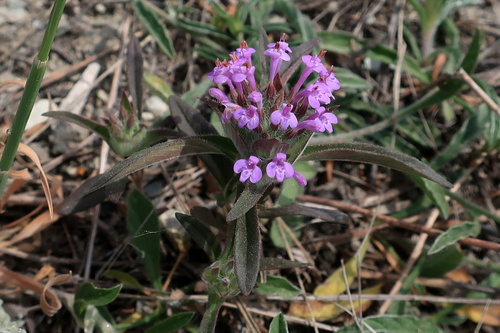
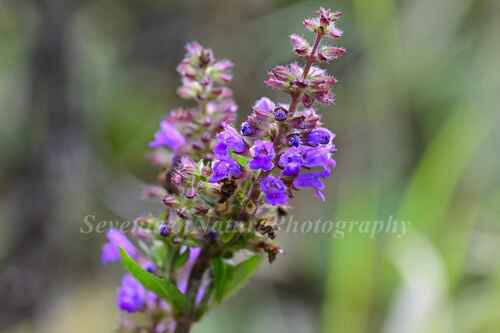
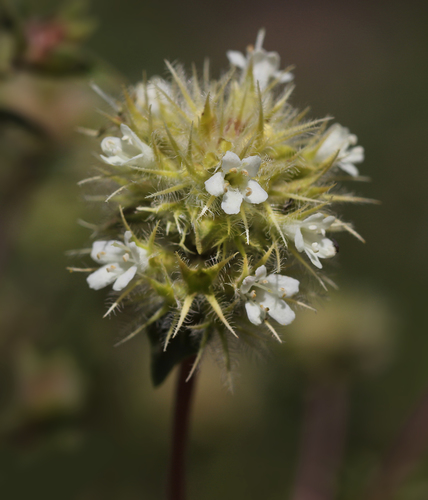
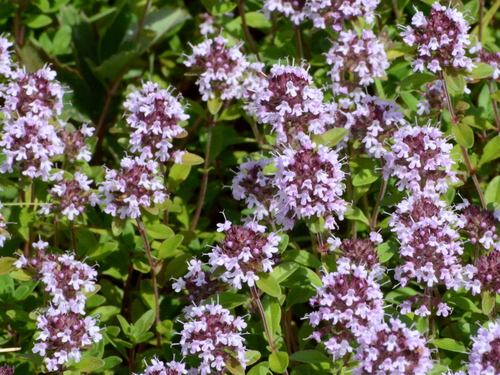
Broad-leaved thyme (Thymus pulegioides L.) is a creeping dwarf evergreen shrub with woody stems and a taproot. It is quite similar to wild thyme (Thymus serpyllum), but it is larger, has wider leaves, and all of its stems develop into flowering shoots. Its reddish stems are squarish in cross-section, with hairs growing along the edges. Its leaves grow in opposite pairs and have short stalks; the leaf blades are linear ovate, with tapering bases and untoothed margins. This plant flowers between July and August. Its flowers are most often pink or mauve, arranged into rounded umbels. Each flower has a tube-shaped calyx, and an irregular straight-tubed, hairy corolla. The upper petal is notched, while the lower petal is larger than the two lateral petals and has three flattened lobes that form a lip. Each flower holds four projecting stamens and two fused carpels. The fruit it produces is a dry, four-chambered schizocarp. Broad-leaved thyme is native to temperate regions of Europe. It grows in open, disturbed sites on light, thin, sparse soils. Typical habitats include hills, rocky outcrops, gravel areas, sandy locations, wasteground, and roadsides. This ornamental thyme is suitable for cultivation in any well-drained alkaline or neutral soil positioned in full sun. It works well as a groundcover, and can also be used in cooking in the same way as common thyme. Numerous cultivars have been selected for garden use. Two of these cultivars, 'Aureus' which has lemon-scented gold leaves, and 'Bertram Anderson', have both earned the Royal Horticultural Society's Award of Garden Merit.