About Thymelicus lineola (Ochsenheimer, 1808)
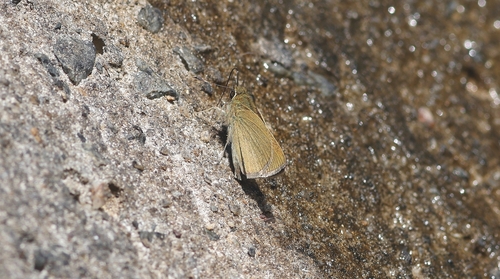
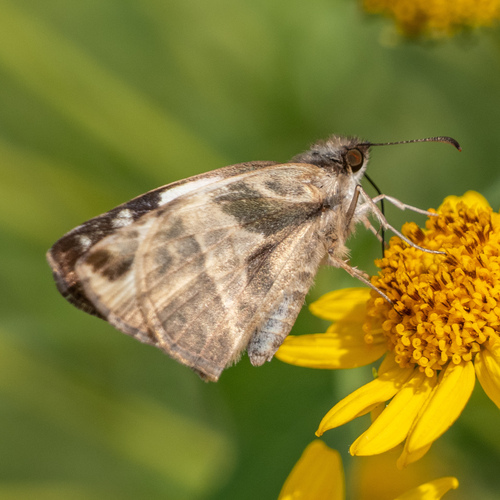
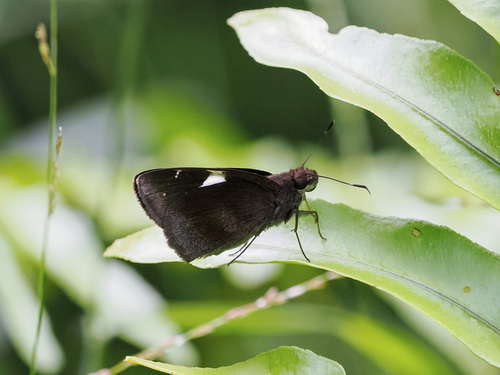
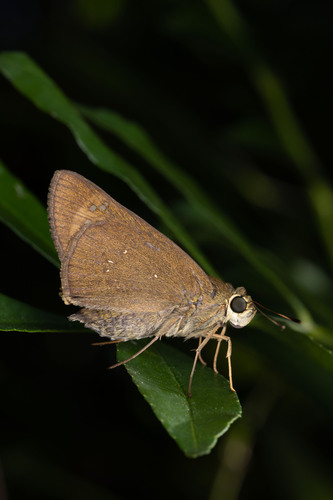
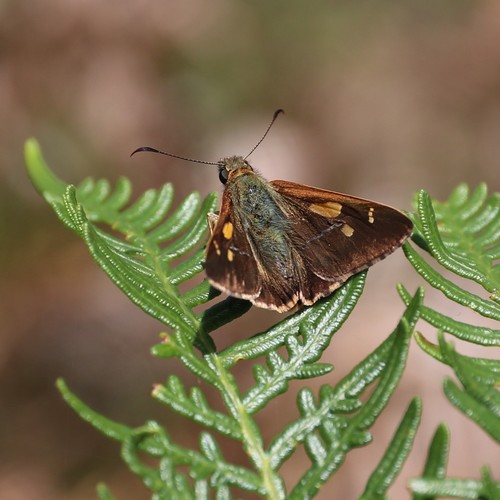
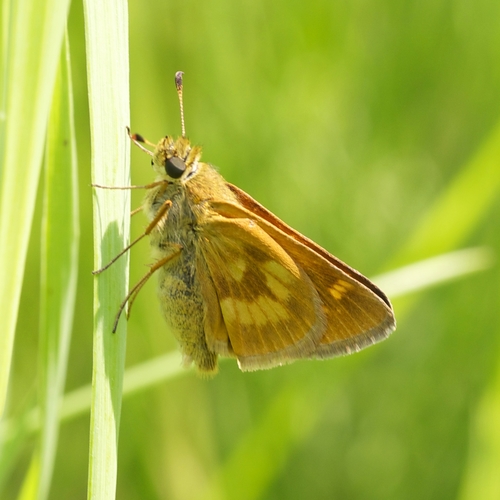
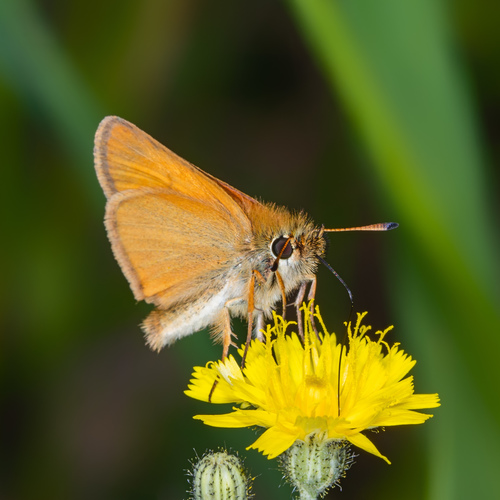
Thymelicus lineola, first described by Ochsenheimer in 1808, is a species of butterfly in the family Hesperiidae. It is called the Essex skipper in Europe and the European skipper in North America. This butterfly has a wingspan ranging from 2.5 to 2.9 cm (0.98 to 1.14 in), and is very similar in appearance to the related small skipper, Thymelicus sylvestris. The two species can be distinguished by the forward-facing flattened section of the antenna tip: this area is black in T. lineola, and orange or brown in T. sylvestris. Males of the two species also differ in their forewing scent marks: for T. lineola males, the scent mark is a fine, straight, short dark line that runs parallel to the forewing edge, while the same scent mark in T. sylvestris males is bolder and bent. T. lineola occurs across most of the Palaearctic region. Its native range extends from southern Scandinavia through Europe to North Africa, and east all the way to Central Asia. It was first formally identified in the United Kingdom in 1889, and its range is currently expanding across both England and northern Europe. This species was accidentally introduced to North America in 1910 via London, Ontario, and has since spread across southern Canada and into several northern U.S. states. It is the most abundant skipper in many parts of the Northeastern United States. For its life cycle, T. lineola lays its eggs in strings on grass stems, where eggs remain over the winter. The butterfly's preferred larval foodplant is cock's-foot, Dactylis glomerata. It rarely uses Yorkshire fog, the preferred foodplant of the small skipper. Additional recorded larval foodplants for T. lineola include creeping soft grass (Holcus mollis), couch grass (Elymus repens), timothy-grass (Phleum pratense), meadow foxtail (Alopecurus pratensis), false brome (Brachypodium sylvaticum) and tor-grass (Brachypodium pinnatum). Caterpillars emerge in spring and feed on their host plants until June. After feeding, they form silk-tied leaf shelters at the base of their foodplant to pupate. Adult butterflies fly from July through August. Like most skipper species, T. lineola is fairly strictly diurnal, though individual adults are very rarely found active at night. This species produces oval pale greenish-yellow eggs that are flattened top and bottom, with slightly depressed tops. Caterpillars are green, with yellowish grooves between their body segments. Each caterpillar has a darker green dorsal stripe and yellow lateral lines. The larval head is pale brown with darker brown stripes. The elongate chrysalis is yellowish-green, and retains the dark dorsal stripe seen in the caterpillar stage.