About Thymbra capitata (L.) Cav.
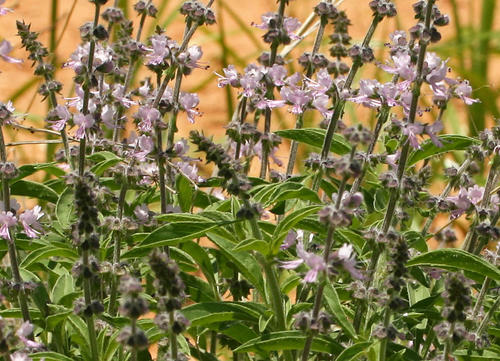
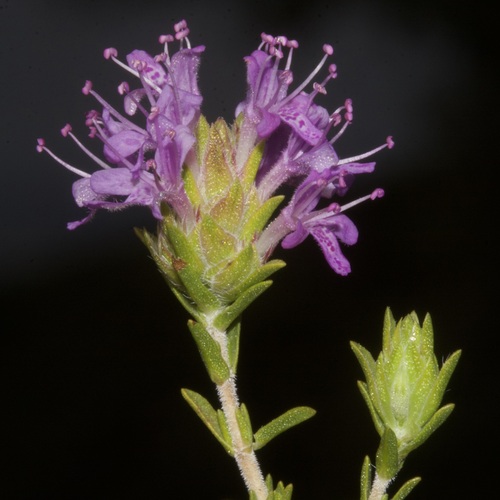
This species is scientifically known as Thymbra capitata (L.) Cav. It has ascending stems and narrow, fleshy green leaves dotted with oil glands. The leaves grow up to 12 mm (0.47 in) long. The pink flowers, each 10 mm (0.39 in) long, grow in cone-shaped clusters at the stem ends, blooming from mid to late summer. These flower clusters are protected by overlapping red-tinged bracts that are 6 mm (0.24 in) long and edged with tiny hairs. In Eurasia, a leafless parasitic dodder species (Cuscuta epithymum) often attaches itself to this plant (also referred to as conehead thyme, under the synonym Thymus capitatus). The dodder takes on the plant's pungent flavor, and also inherited its host's Arabic name al-ṣaʿitrah from this association. Thymbra capitata (cited here as Thymus capitatus) is hardy in USDA Zones 7 through 10. In Israel, this plant (cited as Thymus capitatus) has protected status, so harvesting it is a criminal offense.