About Thrigmopoeus truculentus Pocock, 1899
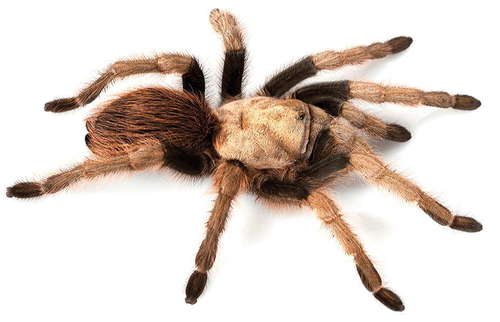
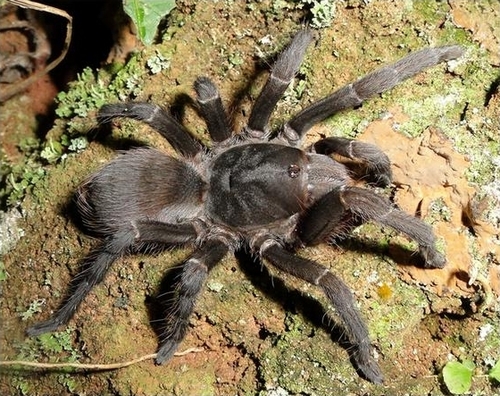
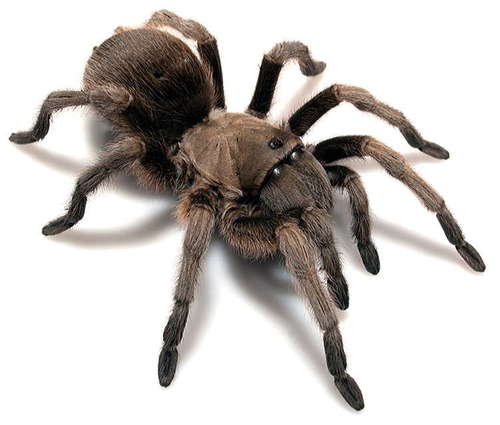
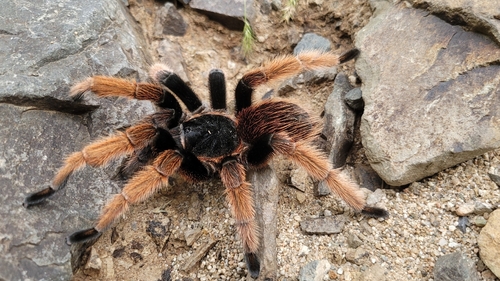
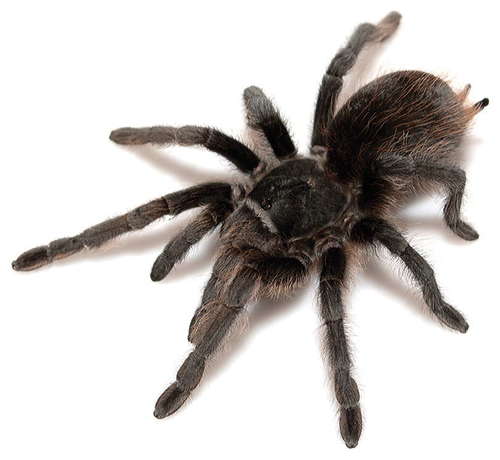
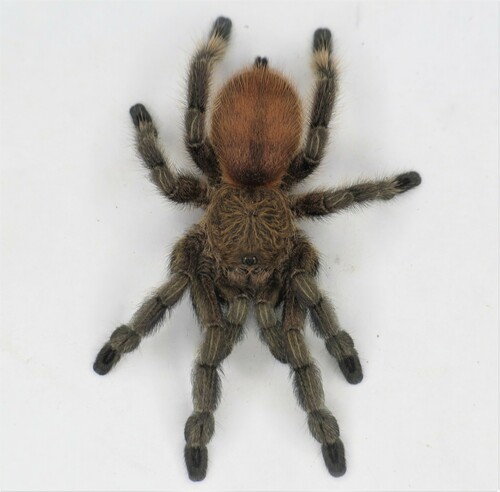
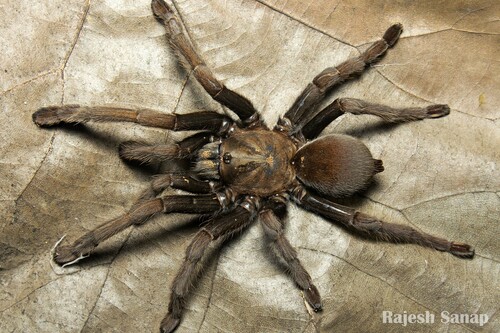
Thrigmopoeus truculentus Pocock, 1899 is a species of Indian tarantula. It has three common names: the Karwar large burrowing spider, Karwar burrowing spider, and lesser Goa mustard tarantula. This species is endemic to the Western Ghats region of India, specifically occurring in the states of Karnataka, Goa, and Maharashtra. It has been recorded living on vertical bunds alongside roads and trek paths in Coorg, as well as across other locations in these three states. In the Coorg and Uttara Kannada districts, burrows made by this spider are found at heights between 0.5 meters and 5 meters above ground level. The bunds that host these burrows are usually covered with ferns and grasses during the monsoon and post-monsoon seasons. Burrows are most often located on bunds under high tree canopy, or in ghat areas that receive very little direct sunlight. Only very few burrows have been observed in locations without any overhead canopy. Burrow entrances of this species are often shaped like a trumpet bell, and the entrance rim is consolidated with a mix of wet mud and spider silk. In some cases, an extended dorsal rim of the burrow forms a porch-like entrance structure. Burrow entrances are frequently reinforced with nearby twigs, dry leaves, and other similar debris. This reinforcement prevents the entrance from collapsing, and also creates an extended passage for the spider to enter and exit the burrow. The embankments where these spiders dig their burrows are mostly covered with herbaceous plant life. During the monsoon season, the spiders' microhabitat is covered in lush green vegetation, which decreases noticeably in the post-monsoon period.