About Thraupis episcopus (Linnaeus, 1766)
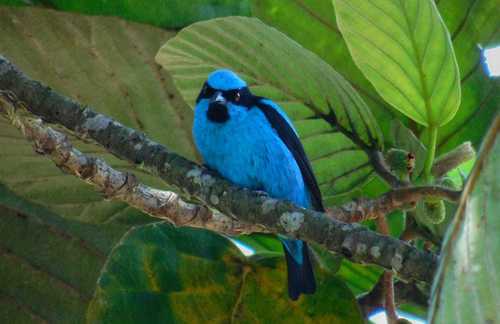
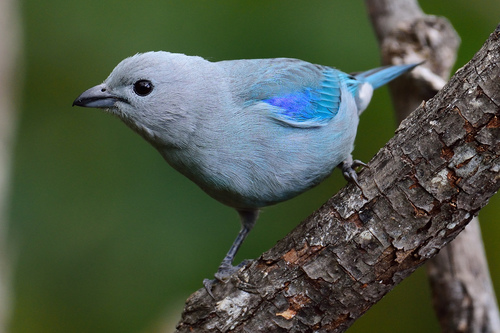
Blue-gray tanager (Thraupis episcopus) measures 16–18 cm (6.3–7.1 in) in length and weighs 30–40 g (1.1–1.4 oz). Adult individuals have a light bluish head and underparts, darker blue upperparts, and a shoulder patch in a distinct shade of blue. Their bill is short and quite thick. The plumage of males and females is similar, while immature blue-gray tanagers have much duller plumage. The species' song is a squeaky twittering, mixed with tseee and tsuup call notes. The breeding habitat of the blue-gray tanager includes open woodland, cultivated areas, and gardens. This species feeds mainly on fruit, and will also consume nectar, insects, and other arthropods. It is a common, restless, noisy, and confiding bird, most often found in pairs, and occasionally in small groups. It does well around human settlements, and will feed on cultivated fruit such as papayas (Carica papaya). The blue-gray tanager lays 1 to 3 (most commonly 2) dark-marked whitish to gray-green eggs in a deep cup nest, built in a high tree fork or a crevice in a building. The female incubates the eggs for 14 days, and chicks fledge 17 days after hatching. Nests of this species are sometimes parasitized by cowbirds of the genus Molothrus. Two individual blue-gray tanagers studied in Parque Nacional de La Macarena, Colombia were infected with microfilariae, an undetermined Trypanosoma species, and another blood parasite that could not be identified. Two additional birds examined near Turbo, also in Colombia, had no blood parasites. In agricultural ecology, T. episcopus thrives in some areas cleared by humans for grazing, but is less attracted to areas with buildings, or high levels of human or livestock activity. The species persists in forest habitats, but will readily move temporarily into abandoned pasture land to feed on wild fruits. Studies have recorded varying results: some found the species never forages in pastures that hold livestock, while others found it merely forages less often in these areas. T. episcopus is more common in secondary forest formed after slash-and-burn agriculture and subsequent abandonment than it is in primary forest. T. episcopus is commonly infected with Blastocystis parasites, specifically Subtype 6 (ST6), which was found only in birds in the study area. ST6 was not detected in cows from the same area, and it remains unassessed whether T. episcopus shares this ST6 subtype with nearby domesticated bird flocks.