About Thomisus scrupeus (Simon, 1886)
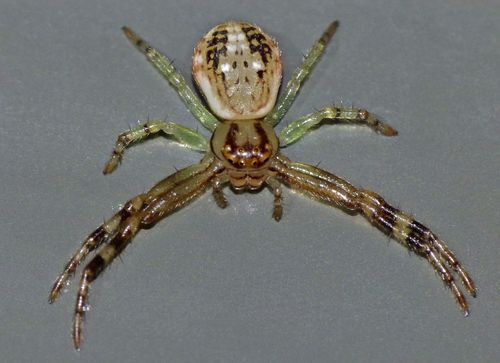
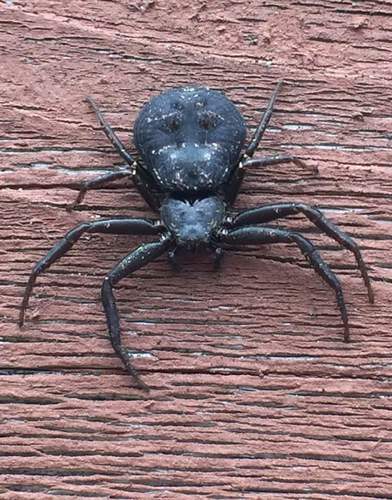
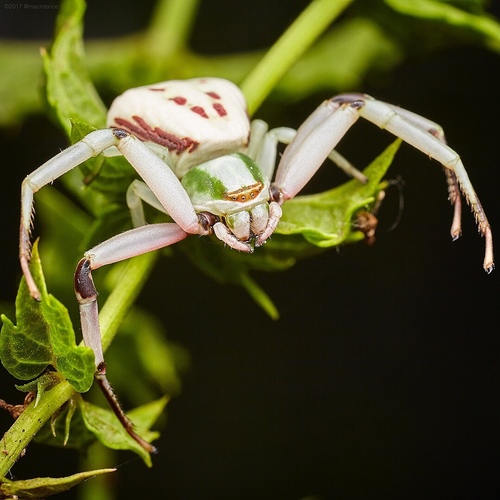
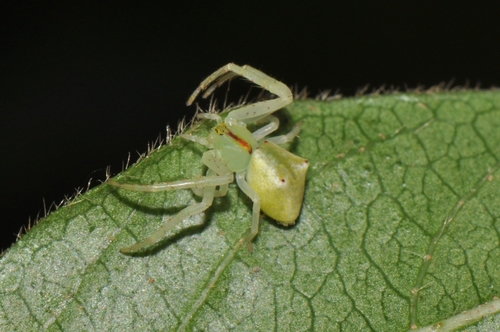
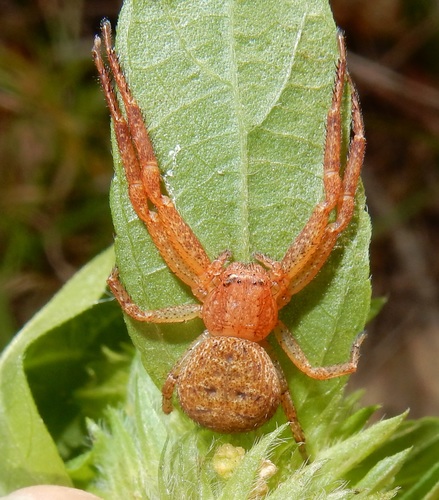
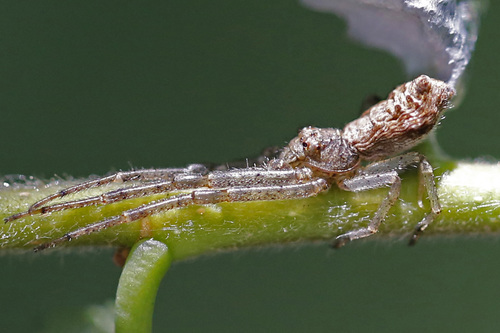
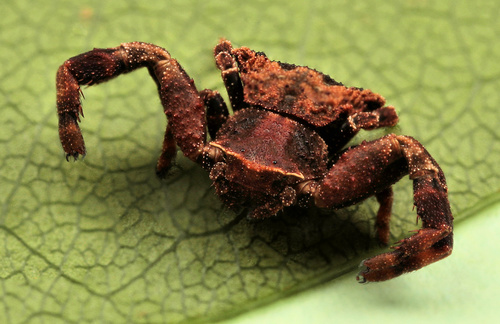
Thomisus scrupeus (Simon, 1886) shows significant variation in size, color, and body shape between sexes and among individual spiders. Like most crab spiders, females of this species are noticeably larger than males: females have a total body length of 7–8 mm, while males measure 3–5 mm. This species can be distinguished from other African Thomisus species by its granular body surface, which is covered in small polyp-like tubercles. Its two pairs of front legs are notably robust, with thickened patellae and tibiae that give the spider a distinct sturdy appearance. Body color varies dramatically, from off-white to yellow-orange in females, and dark brown in males. Body shape also varies considerably: the abdomen ranges from flattened, to having more prominent tubercles, to being more rounded. Thomisus scrupeus is widespread across sub-Saharan Africa, and has been recorded in Senegal, Ivory Coast, Kenya, Malawi, Rwanda, South Africa, Tanzania, the Democratic Republic of the Congo, and Zimbabwe. In South Africa, the species has been documented in multiple provinces: Eastern Cape, Gauteng, KwaZulu-Natal, Limpopo, Mpumalanga, and North West Province. Notable localities include several nature reserves and national parks, such as Kruger National Park, Addo Elephant National Park, and Ndumo Game Reserve. Thomisus scrupeus is a free-living plant-dwelling species largely restricted to the shrub and tree layer. It is far more abundant during the summer months: adult females are collected from December to May, and adult males from November to January. These spiders are frequently seen holding their front legs together in a characteristic pose. Females attach white egg sacs to slightly curved leaves, and stay with the eggs until the spiderlings hatch and are strong enough to disperse. The species has been sampled from multiple vegetation types, including broadleaf woodland, Vachellia tortilis savanna, and V. xanthophloea forests. It has also been found in agricultural areas, including avocado and citrus orchards.