About Thomisus citrinellus Simon, 1875
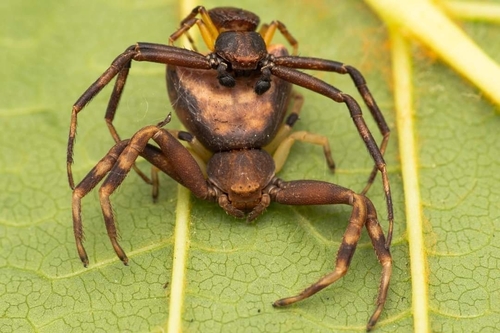
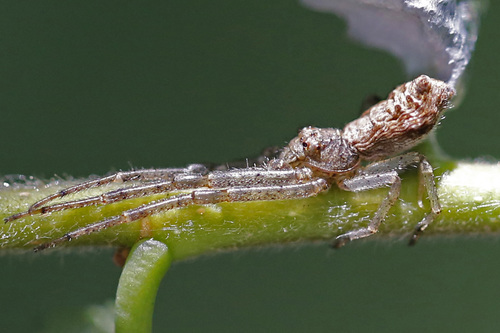
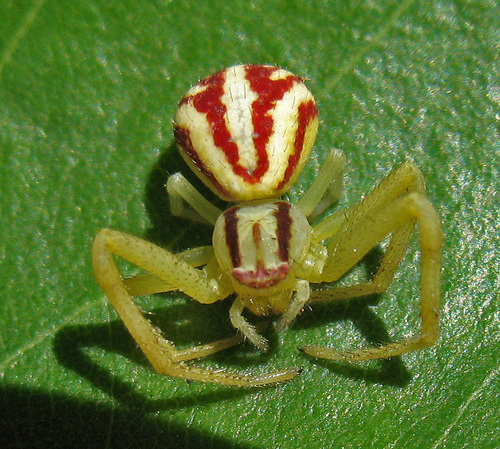
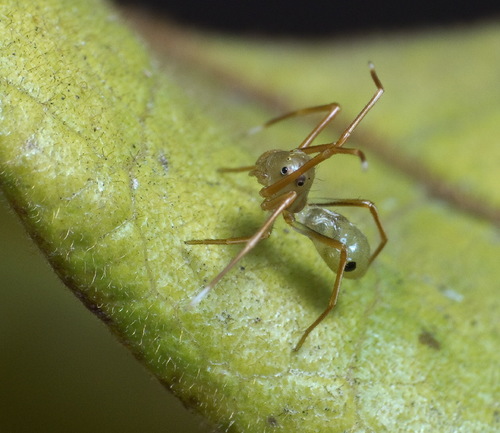
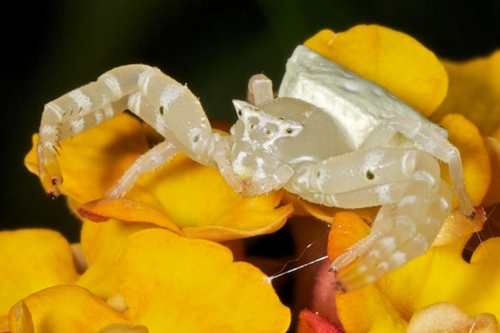
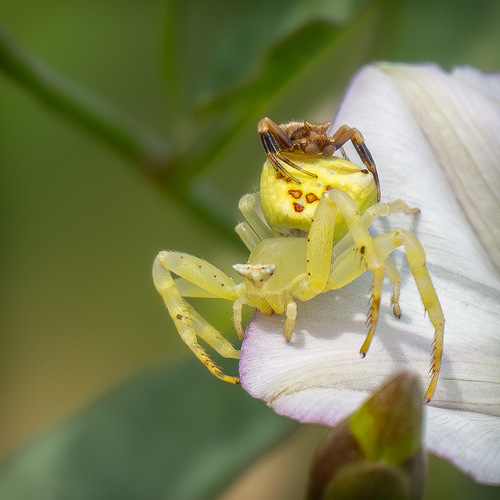
Males of Thomisus citrinellus Simon, 1875 are notably smaller than females, measuring approximately 2.6 mm in total length per the original species description. This species shows considerable variation in overall coloration and markings. Male body form and coloration resemble that of the related species Thomisus onustus, but males of T. citrinellus have proportionally shorter legs. The male abdomen is generally a uniform mottled yellowish color, and has a more oval shape. Both the male abdomen and cephalothorax are yellow; the male cephalothorax has yellow-brown sides, and is covered in small, conspicuous tubercles, each topped with a short, strong, pale-colored spine. Females are considerably larger than males. The female cephalothorax shares the male's yellow base color, and has white ocular prominences and a white face, plus broad longitudinal deep yellow-brown bands running along either side. The female legs are yellow, with irregular chalky white and red-brown markings. The female abdomen is strongly rounded at the rear end, but has a more angular front portion; female abdominal coloration also shows considerable variation, ranging from pale whitish yellow to individuals with distinct brownish markings. Thomisus citrinellus has been recorded from a wide range of locations across the Mediterranean region, multiple areas of Africa, the Seychelles, Yemen (both mainland Yemen and Socotra Island), and Iraq, and may also be present in Iran. Confirmed recorded localities span Egypt, South Africa, and the broader Middle East. Per the original species description, adults of both sexes and juveniles have been collected from low-growing plants and flowers in the plains of the Jordan River region.