About Thinopinus pictus J.L.LeConte, 1852
Identification: Like other rove beetles, Thinopinus pictus has shortened elytra that leave most of its abdomen exposed. Males average 17 millimetres (0.67 in) in length, while females average 18 mm (0.71 in). Males have a cleft on their last abdominal sternite, allowing easy distinction from females. This species has cryptic coloration that varies geographically to match the sand of its habitat. Populations north of central California are darker, matching the region’s dark volcanic sand, while populations in the southern part of the range are much paler, matching the lighter southern sand. This geographic variation once led researchers to believe T. pictus was divided into two separate subspecies.
Ecology: T. pictus lives in the sandy intertidal zone. During the day, it hides in temporary sand burrows or under kelp and beach debris, and prefers to occupy the wettest, softest available sand. At night, it emerges and travels to the high tide level to search for prey. Individuals use both inactive ambush predation and active foraging to hunt. Their prey consists mostly of beach hoppers in the group Amphipoda, but they have also been observed eating beach flies, isopods, and other T. pictus. Males appear to feed less than females, but are more active, a trait that may increase their chance of locating a mate.
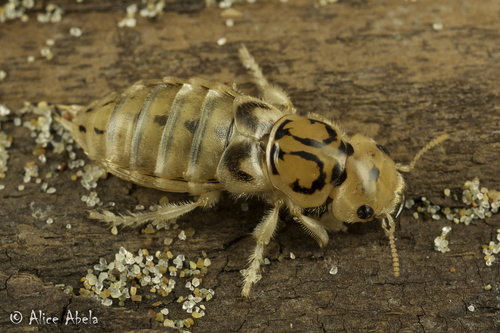
Reproduction: The breeding season for T. pictus is thought to run from August to October. Dissected females carry only 2–3 eggs at a time, which are laid one at a time in sand. These beetles are likely long-lived, to allow for enough successful reproduction. In laboratory settings, eggs hatch after approximately 14 days. Larvae are whitish with black markings. The duration of their larval instars has not been documented.