About Thingia ambigua (S.Watson) Hershk.
Species Nomenclature and Growth Form
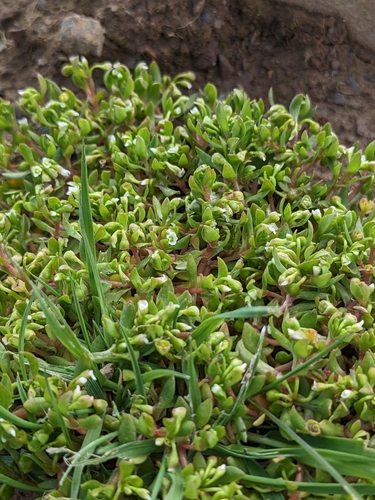
Thingia ambigua (S.Watson) Hershk. is an annual plant with fleshy roots.
Stem Characteristics
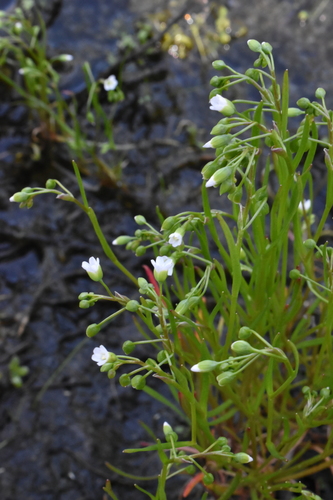
Its stems grow both outwards and upright, reaching lengths of 3–18 centimetres (1.2–7.1 in).
Leaf Structure
The species has narrow leaves that clasp the stem at their base; each leaf blade measures 1.5–6 centimetres (0.6–2.4 in) long.
Inflorescence and Petals
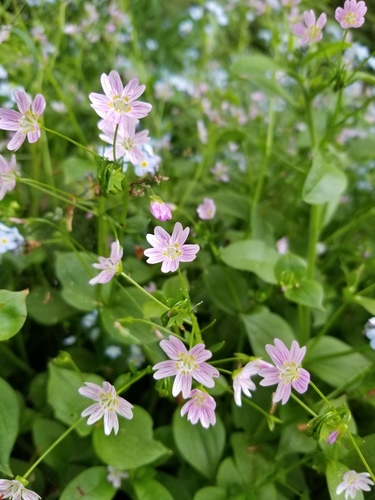
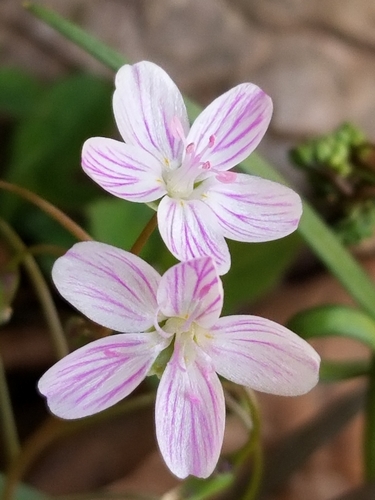
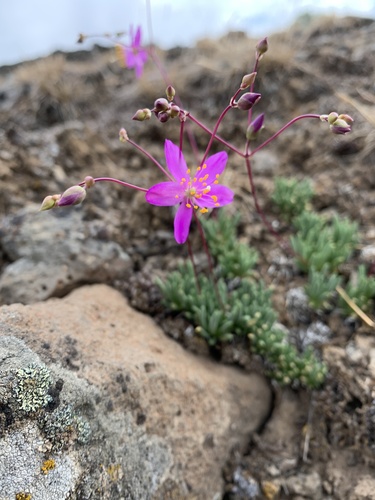
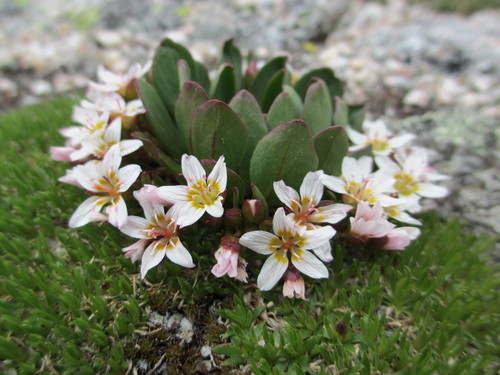
It produces dense clusters of flowers, where each individual flower holds 3–5 white petals.
Flower Morphology
Flowers have 5–10 stamens with yellow anthers, three stigmas, and a pedicel 0.1–0.3 centimetres (0.04–0.12 in) long.
Seed Traits
The seeds of T. ambigua are oval-shaped and black.
Flowering Period
This species flowers between November and February.
Genus Distinguishing Features
The genus Thingia has several distinctive characteristics that separate it from its close relatives.
Carpel Count Comparison
It has three carpels, while species in the related genera Calyptridium and Philippiamra have only two carpels.
Foliage Comparison with Lenzia
Though related genus Lenzia also has three carpels, its foliage differs from that of Thingia.
Stem and Flower Structure Comparison
Thingia plants have leafy stems and complex flower structures, while Lenzia plants have almost no visible stems and only produce solitary flowers.
Leaf Vein Arrangement Comparison
An additional difference is found in leaf vein arrangement: Thingia has a three-dimensional vein arrangement, while the veins of the other related genera are arranged in a two-dimensional pattern.