About Thetys vagina Tilesius, 1802
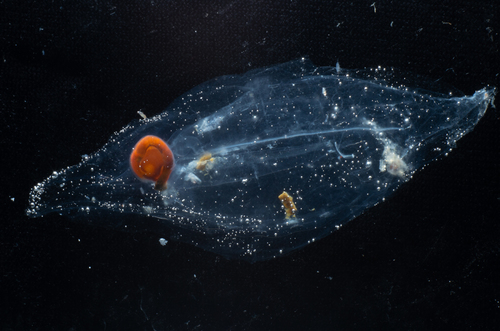
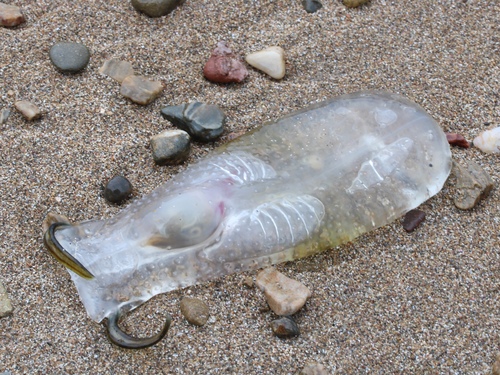
The maximum body length of Thetys vagina Tilesius, 1802 can reach up to 333 mm (13 inches). This species develops into two distinct forms with alternating generations: the aggregate generation, made of aggregate sexual blastozooids, and the solitary generation, made of solitary asexual oozooids. Aggregate form blastozooids can grow up to 250 mm and have five muscle bands. Solitary form oozooids can reach 300 mm in size, have around 20 muscle bands that give a striped appearance, and have two short dark-colored tentacles at opposite ends of the body, attached to the upper and lower body halves. Both forms have outer tests covered in ridges and grooves. Their digestive system is pigmented and visible as a dark or colorful lump. Embryos of this species measure between 10 and 15 mm. Thetys vagina lives in pelagic marine environments. It inhabits tropical and temperate waters of the Pacific, Atlantic, and Indian Oceans, and is occasionally found in colder waters of the northern Atlantic, likely carried there by warm water currents. The species is widespread but generally occurs at low density, though it can sometimes be found at very high density, which means it is only rarely caught and recorded. Records of Thetys vagina found off the central coast of British Columbia mark the northernmost confirmed occurrence of the species to date. Cataloging volunteers have recorded the species along the U.S. West Coast, and it has been reported to clog fishing nets off the coast of northern Honshu and southern Hokkaido, Japan. In January 2009, the highest measured biomass of Thetys vagina was recorded in the Tasman Sea, reaching 852 g wet weight per cubic meter. Thetys vagina resides in the photic zone, and is often found in areas with high chlorophyll concentrations, which correlates with its diet rich in phytoplankton. Large increases in Thetys vagina populations are associated with increases in phytoplankton abundance. The full ecology of this species is not yet understood. Waste produced by Thetys vagina is densely packed, sinks rapidly, and has a high carbon content. The species' carcasses also sink quickly and are carbon rich, with carbon making up 31% of their dry weight. These traits make Thetys vagina an efficient carbon sink, but also make the species harder to study. This carbon flux from Thetys vagina can account for up to 67% of the mean daily organic carbon flux in local areas. Analyses of the Tasman Sea floor at depths between 200 m and 2500 m conducted in 2007 and 2009 found large quantities of Thetys vagina remains. These depositions are among the largest recorded gelatinous zooplankton depositions ever documented. Benthic communities have been observed consuming Thetys vagina carcasses, and this sinking organic input provides nutrients to these communities, likely forming a large source of carbon input to benthic ecosystems.