About Theria primaria (Haworth, 1809)
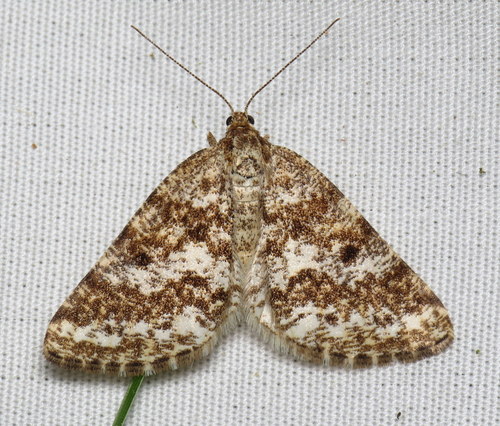
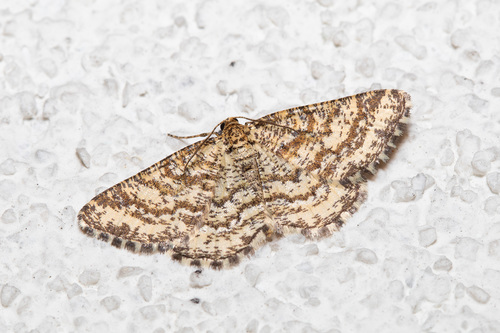
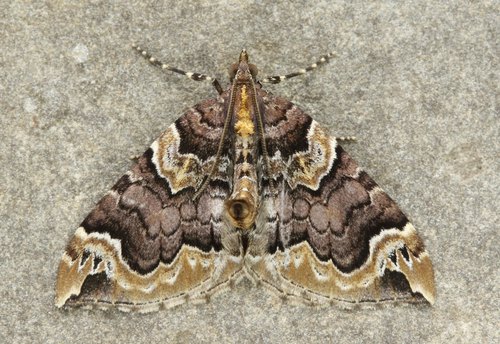
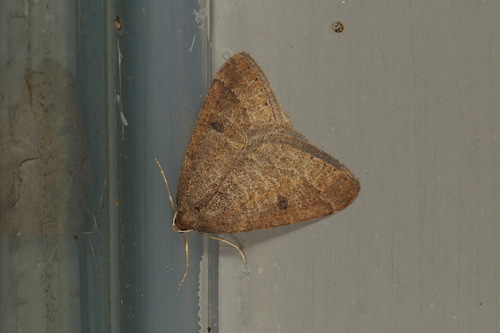
Theria primaria, commonly called the early moth, is a moth species belonging to the family Geometridae. This species is found across Western Europe and the South Caucasus. It has a wingspan of 32–37 mm (1.3–1.5 in), with forewings measuring 14–17 mm (0.55–0.67 in) in length. The base ground colour of its forewings is reddish brown. For males, the subterminal and antemedial lines are slightly wavy, and the area between these lines is usually darker brown than the overall forewing ground colour. The apex of the forewing is rounded, and a small discal spot is located toward the costal edge. The hindwings are pale whitish brown and have a very small discal spot. Females of this species have short wings, reaching only 60% of the length of their abdomen. Males can be immediately identified by the large forewing discal spot and two crenulate dark lines that have white edges on their reverse sides. The female has rudimentary wings with an acute apex; the forewing bears two closely placed dark lines, and the space between these lines is often darkened into a distinct band. The darker aberration ab. ibicaria H.-Sch. has obsolete lines. This moth flies from January to February. The larva of Theria primaria feeds on hawthorn (Crataegus monogyna) and blackthorn (Prunus spinosa).