About Theretra oldenlandiae Fabricius, 1775
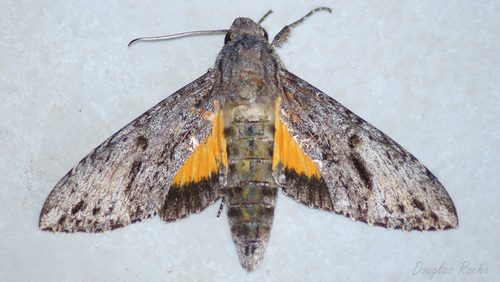
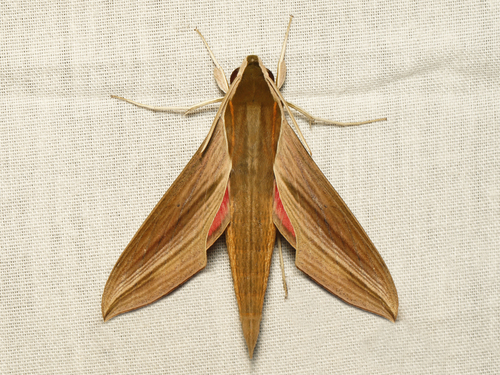
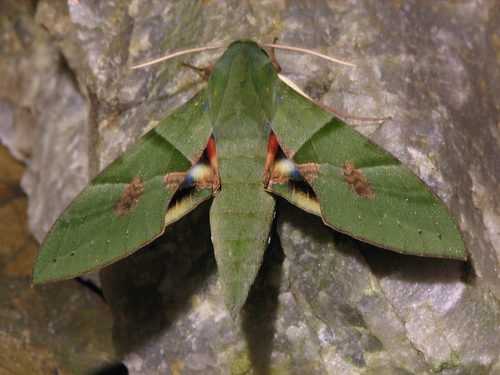
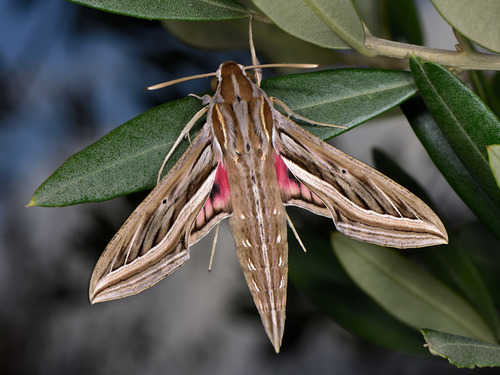
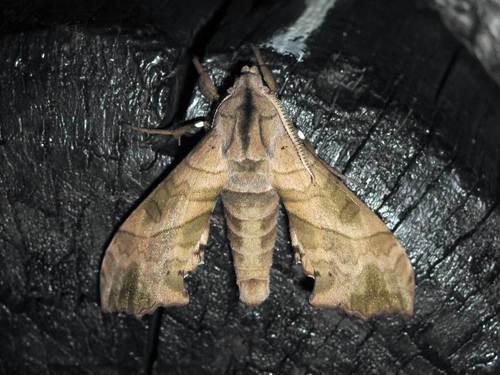
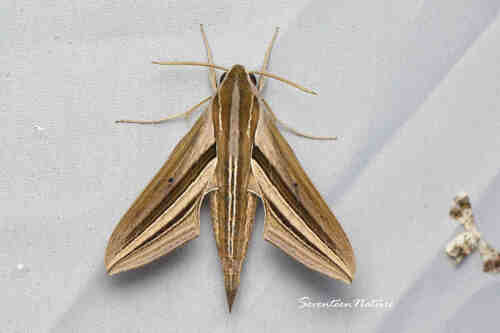
This species, Theretra oldenlandiae, can be distinguished from the related Theretra lycetus by its greyish brown color that lacks pink suffusion. The two dorsal lines on its abdomen are silvery white, and the sides of the abdomen are ochreous rather than golden. Oblique stripes are present on its forewing, and the hindwing has a narrow, ochreous submarginal band. The larva is pale purplish brown. It has a yellow subdorsal line, white spots on the thoracic somites, and a pale lateral line below these spots. Black-ringed ocelli occur on the 4th to 10th somites: the first two ocelli are blue-centered, while the posterior ocelli are purple-centered. In early instars, the posterior ocelli are crimson-centered, and there are dorsal bands made up of yellow specks. The caterpillar has a black, white-tipped tail-like horn that it sweeps back and forth in an arc as it crawls. The species occurs in open lowland habitats. It is distributed across India, Sri Lanka, China, Borneo, Japan, the Philippines, Thailand, and Australia. It was first described by Johan Christian Fabricius in 1775.