About Theraphosa blondi (Latreille, 1804)
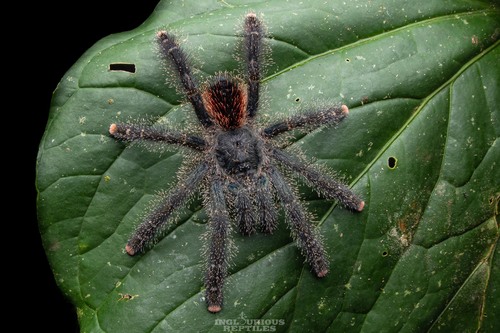
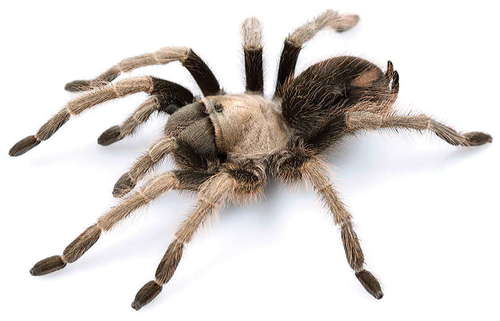
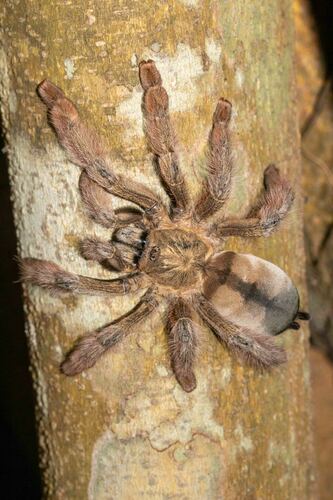
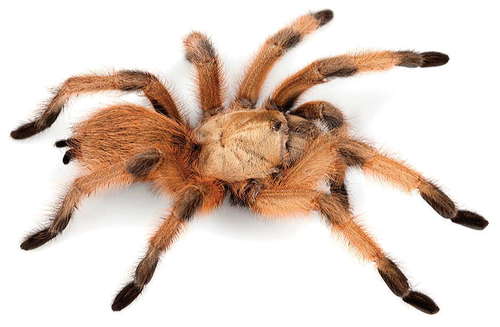
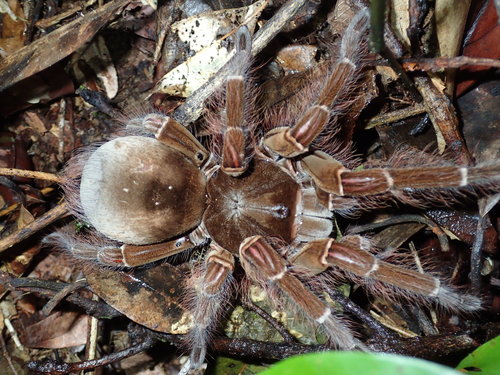
Theraphosa blondi, commonly called the Goliath birdeater, has a maximum leg span of 30 cm (12 in), maximum body length of 13 cm (5.1 in), and can reach a weight of up to 175 g (6.2 oz). It is one of the few tarantula species that lack tibial spurs, which are typically present on the first pair of legs of most adult males. Its body is mostly tan to light brown with golden hues. This spider is native to upland rainforest regions of northern South America, including Suriname, Guyana, French Guiana, northern Brazil, eastern Colombia, and southern Venezuela. It is most commonly found in the Amazon rainforest. It is a terrestrial, nocturnal species that lives in deep burrows, and is often found in marshy or swampy areas. Unlike many other spider species, female Goliath birdeaters rarely eat males during mating. Females mature between 3 to 6 years and have an average lifespan of 15 to 25 years, while males die soon after reaching maturity and only live 3 to 6 years. Individuals range in color from dark to light brown, with faint markings on their legs. They have hair covering their bodies, abdomens, and legs. Females lay 100 to 200 eggs, which hatch into spiderlings after 6 to 8 weeks. The Goliath birdeater is edible, and is included as part of local cuisine in northeastern South America. To prepare it, urticating hairs are singed off, then the spider is roasted in banana leaves. Its flavor has been described as shrimp-like.