About Themeda triandra Forssk.
Size and Growth Habit
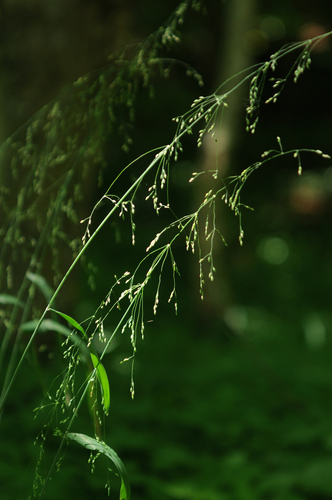
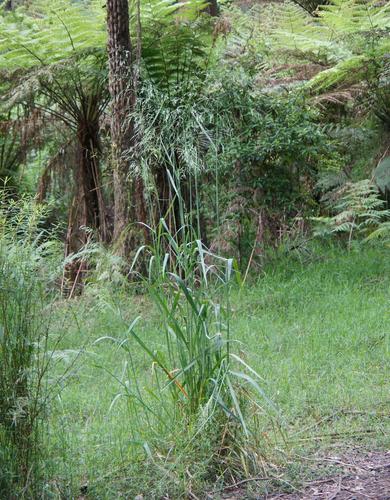
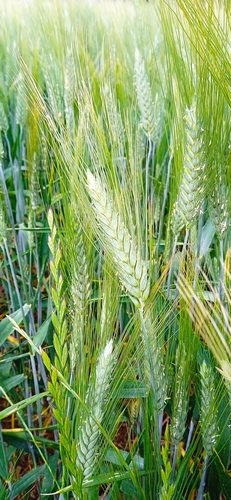
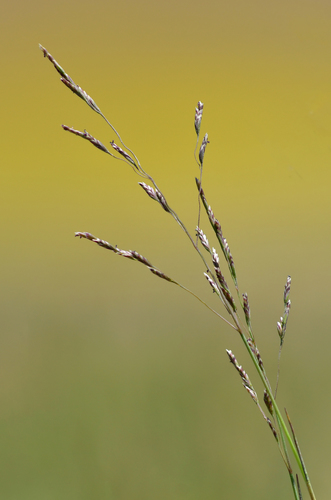
Themeda triandra Forssk. is a perennial grass that grows in dense tufts reaching up to 1.5 metres (5 ft) tall and 0.5 m (1+1⁄2 ft) wide. It flowers in summer, producing large red-brown spikelets on branched stems.
Leaf Characteristics
Its leaves are typically 10–30 centimetres (4–12 in) long and 1–8 millimetres (1⁄16–5⁄16 in) wide, but can also grow to 10–50 cm (4–19+1⁄2 in) long and 2–5 mm (1⁄16–3⁄16 in) wide. Leaves are grey-green in winter and turn red-brown in summer.
Inflorescence Structure
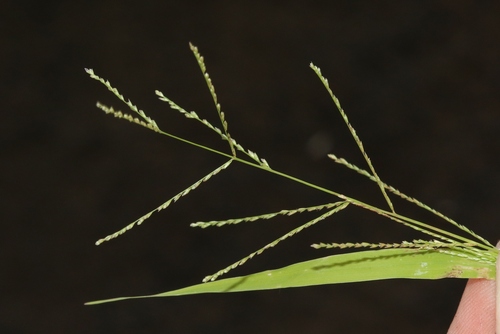
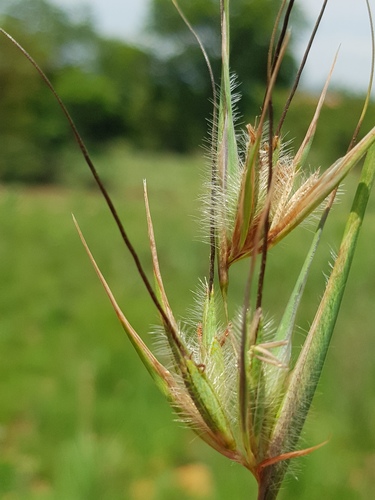
Its compound, fasciculated inflorescence is 10–30 cm (4–12 in) long and made up of a single raceme. Its pedicels are oblong and 0.5 mm long, while its lemma is 25–70 mm (1–2+3⁄4 in) long, and is both apical and geniculate.
Seed Head Features
The awn column of the lemma is hispidulous and twisted. The plant's blooms give off a strong perfume, and its large, often red-brown seed head is made up of clustered spikelets.
Global and Australian Distribution
This species is distributed across Asia, Africa, Australia, and the Pacific. In Australia, it occurs in every state and territory.
Habitat Preferences
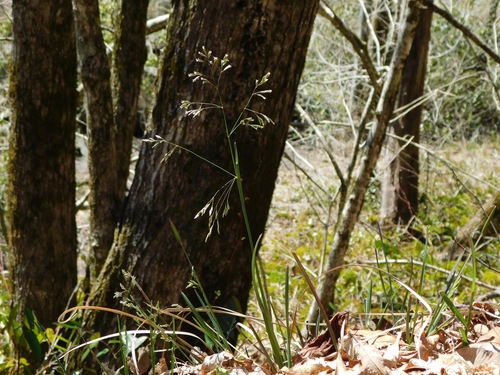
It grows predominantly in grassland and open woodland communities, and is a significant species in Australian temperate grasslands, a habitat that is considered endangered or threatened across many parts of Australia. It does not grow well under heavy grazing pressure, but benefits from occasional fire.
Soil and Microclimate Tolerance
It tolerates a wide range of soil types, ranging from sandy soils to heavy clays, with little observed association between T. triandra abundance and a specific soil type. It is most common in moist microclimates where moisture collects and grazing is light, such as roadsides and railway lines.
Livestock and Wildlife Use
Young growth of Themeda triandra is palatable to livestock. It is a food source for several bird species, including the long-tailed widowbird, and is occasionally grown as an ornamental plant.
African Traditional Uses
In traditional Ugandan use, the grass's hollow stems are used as thatch for huts and to make pulp for paper. T. triandra seed has been used as a famine food in Africa. In West Africa, its roots are used to make a traditional medicine for treating dysmenorrhoea (painful periods).
Australian Horticultural and Veterinary Uses
In Australia, it is sometimes used as an ornamental plant in rockeries, as a lawn substitute, and in cooking. It has also been found useful for treating horses for obesity, insulin resistance, and foot inflammation, because it contains lower amounts of carbohydrates including sugar, starch, and fructans than introduced grasses.
Pre-Colonisation Aboriginal Uses
Before the colonisation of Australia, Aboriginal Australians harvested kangaroo grass (Themeda triandra), using the leaves and stems to make string that formed the base of fishing nets, as well as for food. Grains were harvested and ground into flour and porridge; the flour was used to make a traditional bread later referred to as damper, though that term is now mostly used for bread made by non-Indigenous Australians, that is described as having a nutty flavour.
Historical Food Significance
Evidence shows this food production dates back to around 30,000 years ago, and the grain was a staple food particularly valuable in arid areas. In recent years, kangaroo grass has sometimes been considered a weed and is sometimes eaten by livestock.
2021 Commercial Research Project
As of 2021, a four-year Australian Government-supported research project led by researcher Dylan Male at La Trobe University, in collaboration with the Dja Dja Wurrung Aboriginal Clans Corporation of central Victoria, is investigating the possibility of developing it as a commercial food crop. Researchers hope kangaroo grass can be grown on a commercial scale and become a regular food source.
Project Findings on Longevity
The project has found tussocks of the grass estimated to be over 50 years old, possibly unique among Australian grasses.
Agronomic Advantages
The plant has several advantages over currently farmed grains: it can survive on land depleted by farming, is very drought-resistant, tolerates extreme temperature changes, is a perennial, can help restore degraded grasslands, and contains 40 per cent more protein than traditional grains used for making bread.
Ecosystem Benefits
Because of its growth habit, forming a very dense tussock with outward-bending leaves, it protects soil, creates its own small ecosystem, conserves moisture, and provides habitat for small native animals such as insects and invertebrates.
Commercial Barriers
At present, the commercial viability of kangaroo grass is limited by low seed yields and limited knowledge of broadacre crop management. The project draws heavily on the traditional knowledge of the land's traditional owners, and involves ongoing communication with farmers and Landcare Australia groups.
2017 Precursor Project
This project follows a smaller 2017 crowdfunded project led by writer Bruce Pascoe on his property in Gipsy Point, eastern Victoria, which was managed by volunteers to develop several Indigenous Australian food crops including murnong (yam daisy), kangaroo grass and native raspberries.
Black Duck Foods Activities
In 2020 Pascoe founded Black Duck Foods, a not-for-profit Aboriginal social enterprise based in Mallacoota, Victoria. Black Duck Foods conducts research into native foods and is currently working on a roadmap for the native grains industry, and has small quantities of kangaroo and spear grass flour available for sale on its website.
Nutritional Research
The University of Sydney has conducted research on the nutritional value of kangaroo grass, finding it is high in protein and minerals.