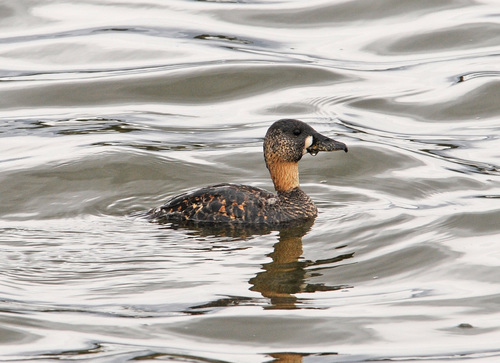
About Thalassornis leuconotus Eyton, 1838
These birds are well adapted for diving, and have been observed staying underwater for up to 30 seconds. They feed especially on waterlily bulbs, but also eat waterlily seeds, waterlily leaves, and other aquatic plants; young ducks also feed on lake fly larvae. When escaping danger, they prefer to dive, which means their namesake white back is rarely visible in living individuals. White-backed ducks live in Africa, specifically across a range extending from Senegal and Chad in the west, to Ethiopia in the east, and down to South Africa in the south. They inhabit lakes, ponds, swamps, and marshes, where their colouration provides good camouflage against predators.