About Tetropium fuscum (Fabricius, 1787)
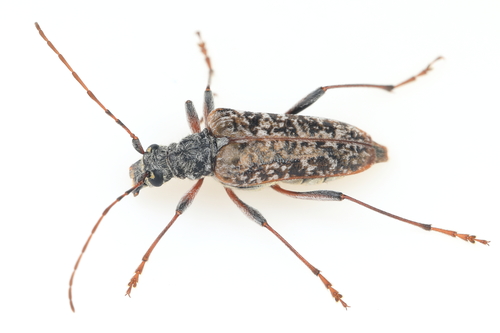
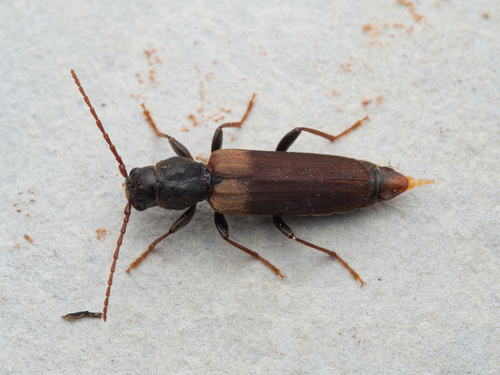
Tetropium fuscum, commonly known as the brown spruce longhorn beetle, is a species of beetle belonging to the family Cerambycidae. It was first described by Johan Christian Fabricius in 1787. This species is native to Europe and Northern Asia, and it has been introduced to Nova Scotia, Canada. It is known as a pest that affects spruce trees. The brown spruce longhorn beetle is native to Continental Europe and parts of Asia, and has been officially recorded in the following countries: Austria, Belarus, Belgium, Bosnia-Herzegovina, Bulgaria, Croatia, Czech Republic, Denmark, Estonia, Finland, France, Germany, Hungary, Italy, Japan, Kazakhstan, Latvia, Lithuania, Moldova, Montenegro, Netherlands, Norway, Poland, Romania, Russia, Serbia, Slovakia, Slovenia, Sweden, Switzerland, Turkey and Ukraine. In 2015, the brown spruce longhorn beetle was found breeding in Rannoch Forest, Scotland, marking the first recorded occurrence of this species in Great Britain. After this initial discovery, the beetle was later identified at two additional sites in Scotland, and there are also scattered unconfirmed reports of the species from England. A review of the insect collection held at the Hunterian Museum uncovered a specimen of brown spruce longhorn beetle collected in Roslin all the way back in 1986. This finding suggests the species may have been breeding in the United Kingdom for thirty years or more. In Canada, the brown spruce longhorn beetle is classified as an invasive species. It was first formally identified in 1999 in Point Pleasant Park, Halifax, Nova Scotia. A later review of older specimens collected in the park in 1990 revealed that specimens originally labelled as the native species Tetropium cinnamopterum were actually Tetropium fuscum. One single adult brown spruce longhorn beetle has also been found in a trap located in Westmorland County, New Brunswick. It is thought that the brown spruce longhorn beetle was most likely introduced to Nova Scotia via wood packaging material imported through the Port of Halifax.