About Tetratheca stenocarpa J.H.Willis
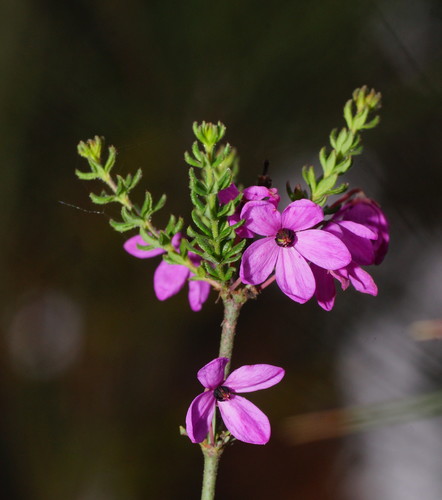
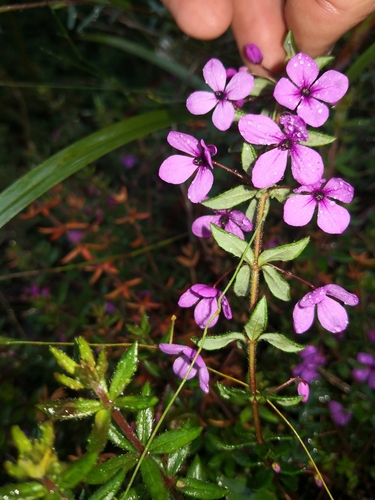
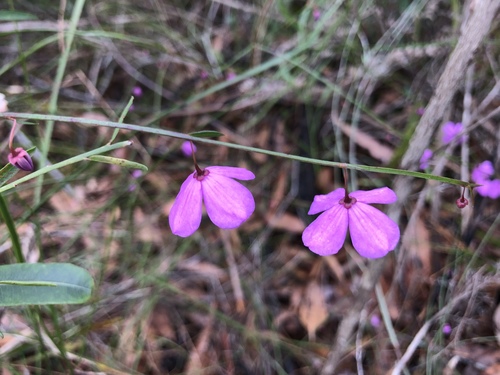
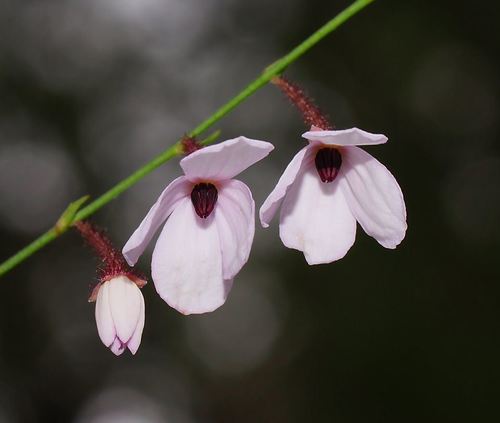
Tetratheca stenocarpa J.H.Willis is a prostrate or weeping small shrub, growing 1 to 1.5 metres high and 0.5 to 1 metre wide. Its leaves range from triangular to rounded, have toothed edges, and measure 5 to 12 millimetres in both length and width. Leaves are reduced to scales on flowering stems, and are most often only visible on new young growth. Bell-shaped flowers, ranging in colour from pale to deep lilac-pink (rarely white), bloom between July and January within the species' native range. Flowers grow in clusters of 1 to 3 on petioles covered in dense, gland-tipped hairs. This species looks very similar to Tetratheca ciliata, but T. ciliata has petioles with only a few gland-tipped hairs. Tetratheca stenocarpa has a restricted distribution, where it grows in damp forests in hilly country east of Melbourne, on French Island, and has a separate isolated population in Gisborne. It is classified as a rare species in the state of Victoria, Australia. It adapts well to disturbed sites, and is often found growing on exposed road cuttings. In cultivation, the species is free-flowering and suited to growing in moist shady positions. It can be planted under established trees, at the top of retaining walls, or used in a cottage garden.