About Tetraopes texanus Horn, 1878
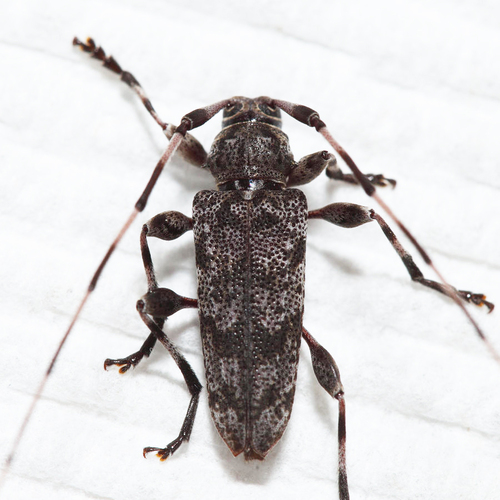
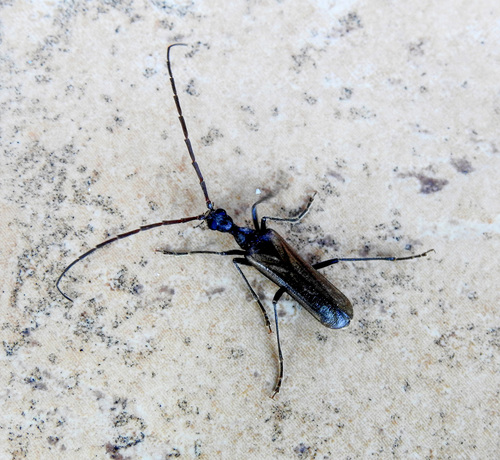
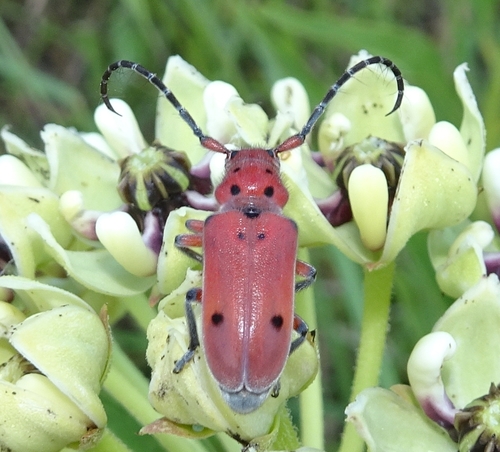
Tetraopes texanus is a species of beetle belonging to the family Cerambycidae. It was first described by George Henry Horn in 1878. This species is found in Northern Mexico and the United States. It has two main primary subpopulations: one located in Texas and Oklahoma, and the other in the Black Belt Prairie of Mississippi and Alabama. Scattered populations occur in southeastern Arkansas, where the species is listed as a species of greatest conservation need. Isolated records of Tetraopes texanus have been documented from glades in Missouri and prairie remnants in Kansas; these occurrences sit at the extreme edges of the species' known range, and may simply represent attempts at long-distance dispersal by the beetle. Like all other members of the Tetraopes genus, T. texanus uses several species of milkweed (Asclepias) as host plants. Confirmed host species include Asclepias viridis, Asclepias viridiflora, and Asclepias syriaca. Adult T. texanus emerge in early May, and feed and breed throughout the month of June. Females lay their eggs in grass stems. After hatching, larvae drop down to the soil, where they feed on the roots of milkweed plants. In most locations, adult beetles begin to die off by July at the end of their breeding season, though a small number of adults can still be found for the remainder of the summer, typically in very low numbers. Where habitat conditions are suitable and a healthy stand of their host milkweed plants is present, T. texanus populations can be locally abundant. This species shows a clear preference for calcareous grassland soils. Researchers hypothesize that this specific habitat requirement may explain the species' unusual disjunct distribution, though this topic remains an active area of ongoing research. A recent IUCN Red List assessment categorized T. texanus as Near Threatened. This classification is based on the species' relatively limited geographic range, ongoing habitat loss, and increasing genetic isolation between its separate subpopulations.