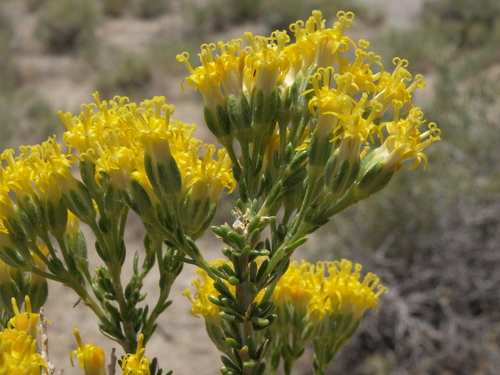
Tetradymia glabrata Torr. & A.Gray is a plant in the Asteraceae family, order Asterales, kingdom Plantae. Toxic/Poisonous.

Photo of Tetradymia glabrata Torr. & A.Gray (Tetradymia glabrata Torr. & A.Gray)
🌿 Plantae ⚠️ Poisonous

Tetradymia glabrata Torr. & A.Gray

Tetradymia glabrata Torr. & A.Gray

Tetradymia glabrata, or littleleaf horsebrush, is a toxic western US shrub in the aster family.

Family
Genus
Tetradymia
Order
Asterales
Class
Magnoliopsida

⚠️ Is Tetradymia glabrata Torr. & A.Gray Poisonous?

Yes, Tetradymia glabrata Torr. & A.Gray (Tetradymia glabrata Torr. & A.Gray) is classified as poisonous or toxic. Toxicity risk detected (mainly via ingestion); avoid direct contact and ingestion. Never consume or handle this species without proper identification by an expert.

About Tetradymia glabrata Torr. & A.Gray

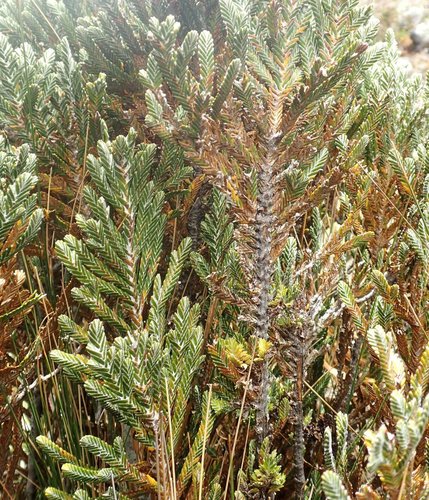
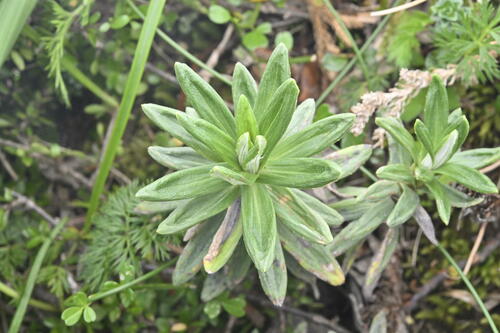
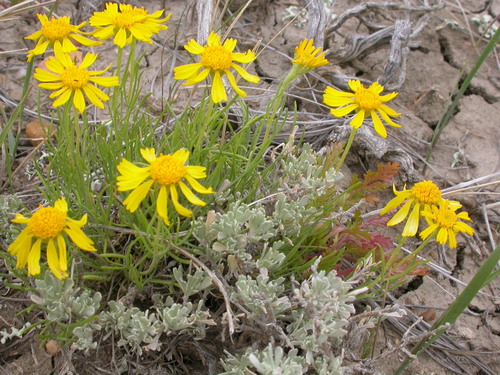
Tetradymia glabrata Torr. & A.Gray is a flowering plant species in the aster family, commonly known as littleleaf horsebrush. It is an erect, bushy shrub that can grow to a maximum height of over 1 metre (3+1⁄2 ft). Its stems are unevenly coated in white woolly fibers, with many exposed bare strips. The plant's narrow, pointed leaves are usually no longer than one centimeter, and most grow in clusters along its branches. The inflorescence holds up to seven flower heads, each enclosed by four woolly phyllaries. Every flower head contains four yellow-cream flowers, each around one centimeter long. The fruit is a hairy, ribbed achene topped with a bristly pappus. This species is native to the western United States, most commonly found in the Great Basin and Mojave Desert. Its native habitats include sagebrush communities, woodlands, and scrub, and it tolerates both saline and alkaline soils. It is the most toxic of all horsebrush species. Along with spineless horsebrush (Tetradymia canescens), it commonly causes illness and death in sheep, due to the presence of furanoeremophilanes and other toxic compounds. It is especially toxic when eaten together with black sagebrush (Artemisia nova).

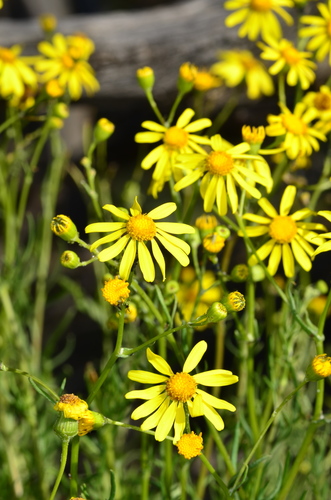
Photo: (c) Jim Morefield, some rights reserved (CC BY) · cc-by

Taxonomy

Plantae Tracheophyta Magnoliopsida Asterales Asteraceae Tetradymia
⚠️ View all poisonous species →

More from Asteraceae

Sources: GBIF, iNaturalist, Wikipedia, NCBI Taxonomy · Disclaimer

Identify Tetradymia glabrata Torr. & A.Gray instantly — even offline

iNature uses on-device AI to identify plants, animals, fungi and more. No internet needed.

Download iNature — Free

Start Exploring Nature Today

Download iNature for free. 10 identifications on us. No account needed. No credit card required.

Download Free on App Store