About Tetradenia riparia (Hochst.) Codd
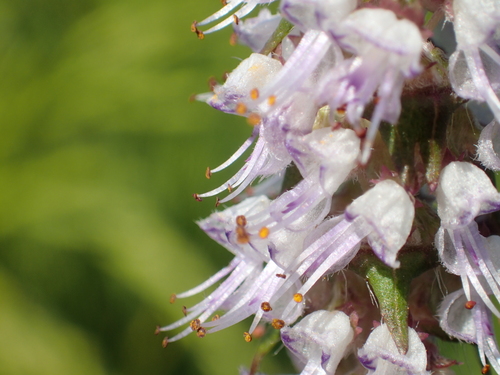
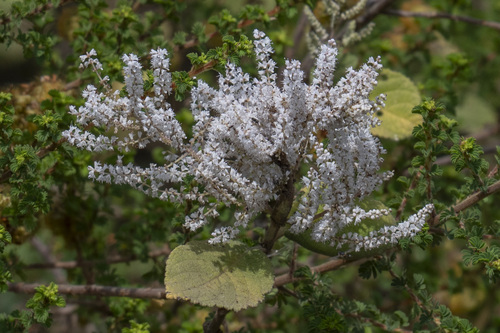
Tetradenia riparia is a dioecious, slightly succulent deciduous shrub that is typically multi-stemmed. It generally grows up to 2 meters (6 feet 7 inches) tall, and can occasionally reach 5 meters (16 feet) in height, with an irregular branching pattern. Its semi-succulent branches carry simple, opposite bright green leaves that are somewhat heart-shaped, sticky, and aromatic. The leaves measure 35 to 80 millimeters (1.4 to 3.1 inches) long, with irregularly coarsely toothed margins. When crushed, the leaves release a ginger scent, and both leaf surfaces are covered in a thin dark red fuzz. Mature stems are brown and smooth, while younger stems have glandular hairs and a ruby tinge, which makes them slightly sticky to the touch.
This species grows on riverbanks, hillsides, forest edges, and in dry woodland valleys, in areas that only experience minor frost. It is native to eastern South Africa, specifically the KwaZulu-Natal, Mpumalanga, and Limpopo provinces, as well as Namibia, Angola, Botswana, and eastern tropical Africa extending as far north as Ethiopia.
Tetradenia riparia is commonly planted as an ornamental garden shrub valued for its abundant decorative flowering. It grows quickly, reaching up to 80 cm of new growth per year, and will flower in its first growing season. It prefers occasional summer watering, with reduced watering in winter, and grows best in well-drained, well-composted soil. It requires pruning after flowering, and can be easily propagated from cuttings.
This shrub is recognized as a medicinal plant. Its leaf essential oil contains antimalarial compounds. It is one of the most popular herbal remedies in Rwanda, and has been used across its native range to treat cough, malaria, diarrhea, dengue fever, headaches (by inhaling the leaf scent), toothache, and other ailments. The plant parts used medicinally are fresh or dried leaves and young shoots. Leaves and shoots are usually collected as needed, because they do not dry well and tend to turn black when dried. Laboratory studies have confirmed that this herb contains compounds that inhibit the growth of the malaria-causing parasite Plasmodium falciparum. Leaf extracts of Tetradenia riparia have also been found to inhibit bacterial growth.