About Terenotriccus erythrurus (Cabanis, 1847)
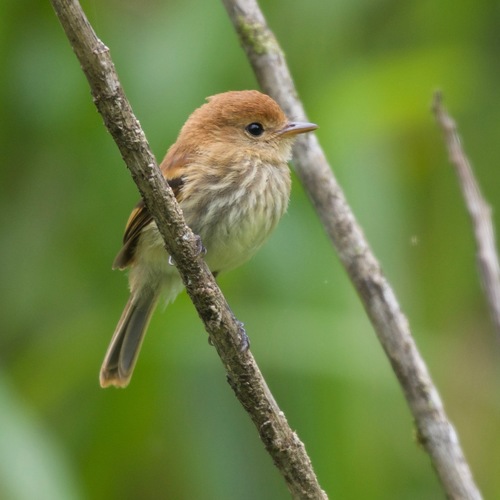
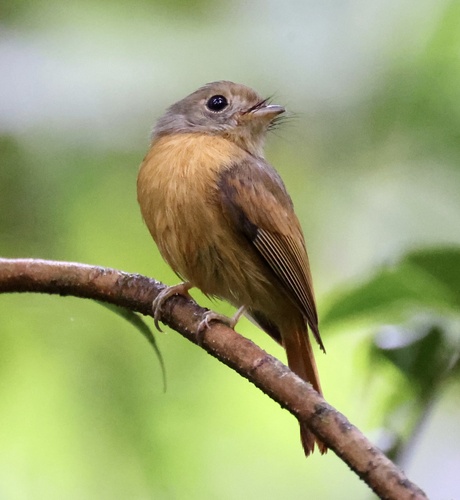
The ruddy-tailed flycatcher, scientifically named Terenotriccus erythrurus (Cabanis, 1847), measures 9.0–10.3 cm (3.5–4.1 in) in length and weighs approximately 7 g (0.25 oz). Its upperparts are grey-olive, with rufous coloration on the rump, tail, wings and eye ring. The throat is buff, the breast is cinnamon, and the belly transitions to pale buff. Adult sexes are similar in appearance, while young birds are brighter on their upperparts and have browner tails and breasts. This species produces a see-oo see call and a repetitive eek eek eek eek eek song. It will sometimes flick both of its wings upward to create a faint whirring sound. The ruddy-tailed flycatcher occurs in lowland habitats, ranging from southeastern Mexico to northern Bolivia, north-central Brazil and the Guianas. Its range extends east of the Andes cordillera across the entire Amazon Basin of northern Brazil and the Guianas, and west of the Andes in Colombia and Ecuador, reaching into Central America. This flycatcher is mainly solitary, only joining mixed-species feeding flocks on occasion. It feeds on insects, particularly leafhoppers, which it picks from foliage or catches through acrobatic aerial pursuit.