About Taxus cuspidata Siebold & Zucc.
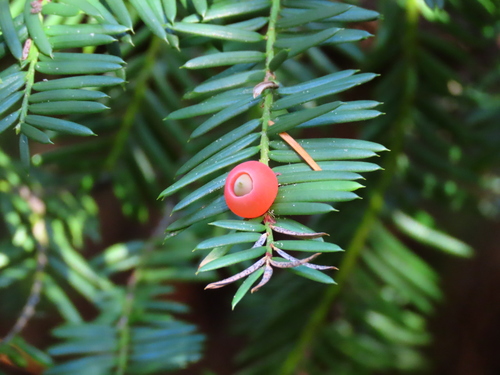
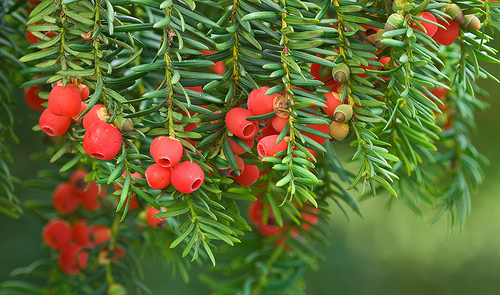
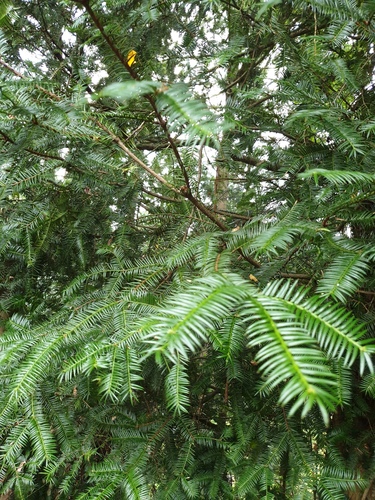
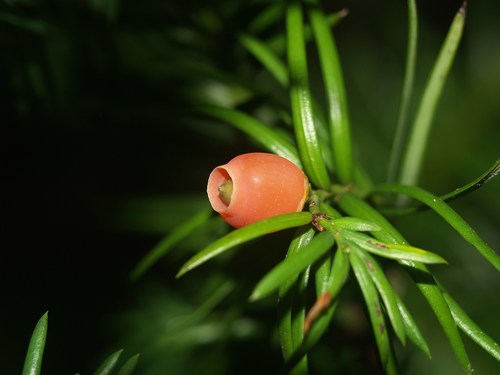
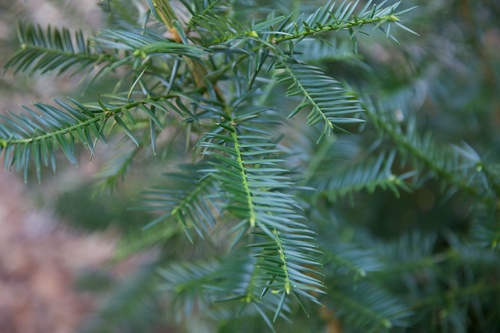
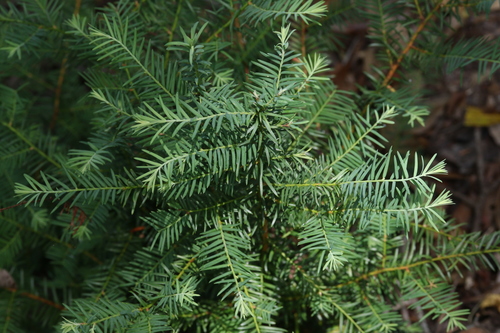
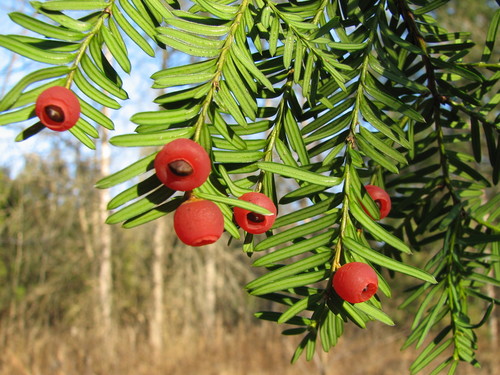
Taxus cuspidata Siebold & Zucc. is an evergreen tree or large shrub that reaches 10–18 m in height, with a trunk up to 60 cm in diameter. Its leaves are lanceolate, flat, and dark green, measuring 1–3 cm long and 2–3 mm broad. Leaves are arranged spirally on the stem, but their bases twist to align the leaves into two flat rows on either side of the stem; this spiral arrangement is more noticeable on erect leading shoots. The plant's seed cones are highly modified: each cone holds a single 4–8 mm long seed, which is partially surrounded by a modified scale that develops into a soft, bright red, berry-like structure called an aril. This aril is 8–12 mm long and wide, and is open at its end. Arils reach maturity 6–9 months after pollination. All parts of Taxus cuspidata except the aril (the red fleshy covering around the seed) are toxic, due to a group of chemicals called taxine alkaloids. These alkaloids are well known for their cardiotoxicity, which acts through calcium and sodium channel antagonism to increase cytoplasmic calcium currents in myocardial cells. Seeds contain the highest concentration of these alkaloids. If any of the plant's leaves or seeds are ingested, urgent medical attention is recommended, along with at least 6 hours of observation after ingestion. The most cardiotoxic taxine is Taxine B, followed by Taxine A; Taxine B is also the most common alkaloid found in Taxus species. Yew poisonings are relatively common in domestic and wild animals that consume the plant accidentally. Taxine alkaloids are absorbed quickly from the intestine, and in sufficient quantities can cause death from general cardiac failure, cardiac arrest, or respiratory failure. Taxines are also absorbed efficiently through the skin, so Taxus species should be handled with care, preferably while wearing gloves. Taxus baccata leaves contain approximately 5 mg of taxines per 1g of leaves. The estimated minimum lethal dose (LDmin) of Taxus baccata leaves for humans is 3.0–6.5 mg/kg body weight, and this value is not confirmed as a factual fixed amount. There is currently no known antidote for yew poisoning, but medications such as atropine have been used to treat poisoning symptoms. Taxine is present in the plant year-round, with the highest concentrations occurring during winter. Dried yew plant material retains its toxicity for several months, and its toxicity can even increase as water is removed; fallen leaves are also toxic. Poisoning most often happens when yew leaves are eaten, but at least one case of poisoning occurred after a victim inhaled sawdust from a yew tree. It is documented that measuring taxine alkaloids is very difficult, which is the main reason different studies report different results. Tested minimum lethal oral doses (LDmin) for various animals are: 82.5 mg/kg for chickens, 10.0 mg/kg for cows, 11.5 mg/kg for dogs, 60.0 mg/kg for goats, 1.0–2.0 mg/kg for horses, 3.5 mg/kg for pigs, and 12.5 mg/kg for sheep. Multiple studies have found taxine LD50 values under 20 mg/kg in mice and rats. For symptoms of human toxicity, see the entry for Taxine alkaloids. Male and monoecious yews in this genus release toxic pollen that can cause mild symptoms (see Taxine alkaloids), and this pollen also acts as an asthma trigger. These pollen grains are only 15 microns in size, so they can easily pass through most window screens. Taxus cuspidata is a source of taxoleic acid. This tree is widely cultivated as an ornamental plant in eastern Asia and eastern North America.