About Tauraco schalowi (Reichenow, 1891)
Taxonomy and Introduction
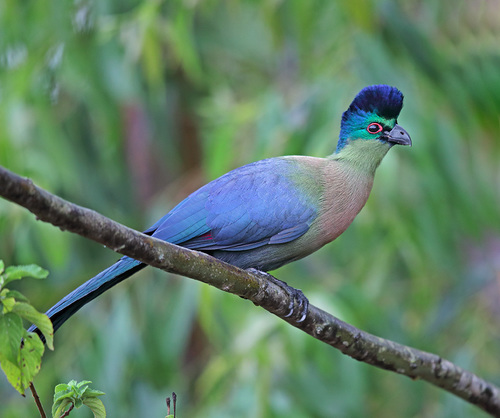
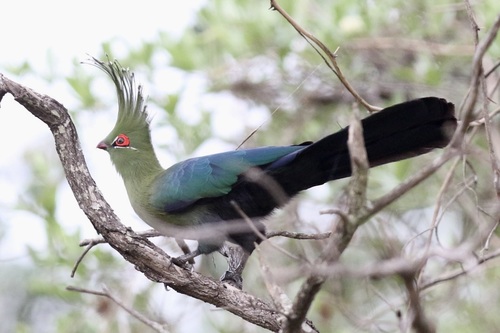
Schalow's turaco (Tauraco schalowi) is a turaco species with distinct physical traits.
Size and Weight
These birds are lightweight for a turaco, weighing just over half a pound (270g) and measuring 15 to 17 inches in length.
Body Plumage
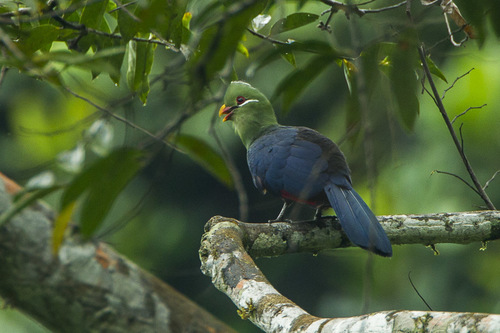
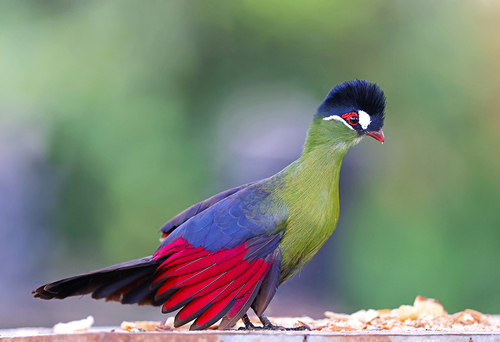
Their body plumage is a coppery-jade green that fades to a dark iridescent blue toward the tail.
Head Features
They have long white-tipped crests, small red beaks, and red skin around their dark eyes bordered by white feathers.
Crest Size
On average, mature individuals of this species have the longest crests of any turaco.
Wing Structure
Their wings are short and round, with red flight feathers adapted for short flights.
Primary Distribution
This species is found primarily in Zambia, central Angola, the southern Democratic Republic of the Congo, the uplands of southern Kenya, northern and western Tanzania, and western Malawi.
Localized Riparian Habitat
It occurs only in very localized areas of Botswana, Namibia, and Zimbabwe, where it frequents riparian habitats along the Zambezi and Cuando Rivers.
General Habitat Range
Across south central Africa, it inhabits forested uplands and wooded inland plateaus.
Eastern Lowland Replacement Species
In the eastern lowlands, it is replaced by Livingstone's turaco, a species similar in appearance and behavior.
Nesting Territoriality
For reproduction, Schalow's turaco are territorial around their nesting sites.
Pair Bond and Incubation
Solitary monogamous pairs build nests and care for their young together, with both partners sharing incubation duties that last 20 to 22 days.
Clutch and Nest Characteristics
Their clutches usually contain only two eggs, which are laid in a platform nest built high in the forest canopy.
Chick Development
Chicks become strong enough to climb outside the nest within 2 to 3 weeks after hatching, and begin flying 1 to 2 weeks after that.