About Tarucus theophrastus (Fabricius, 1793)
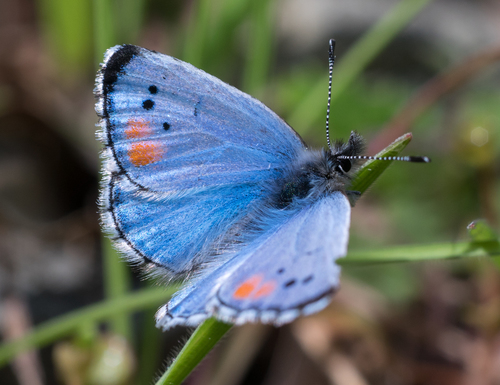
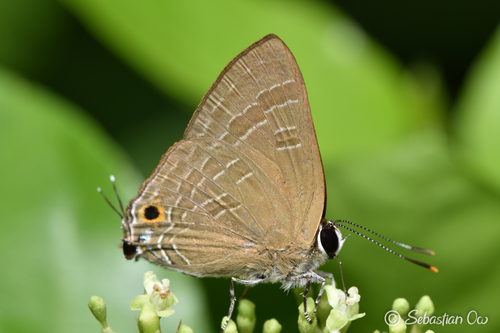
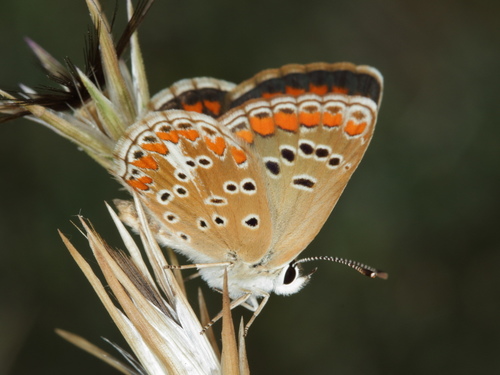
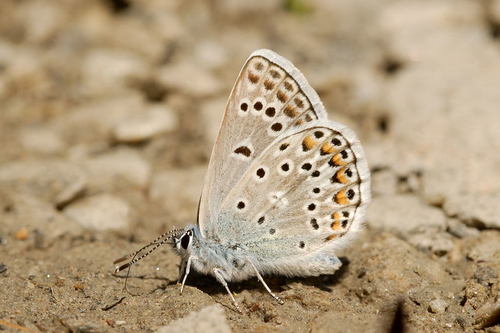
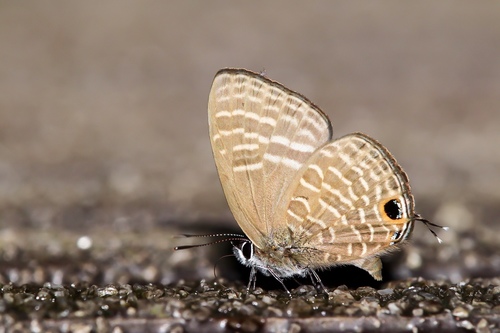
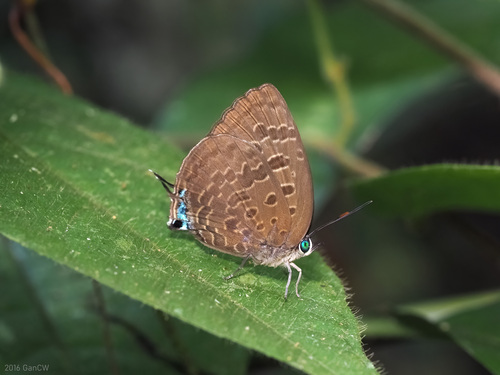
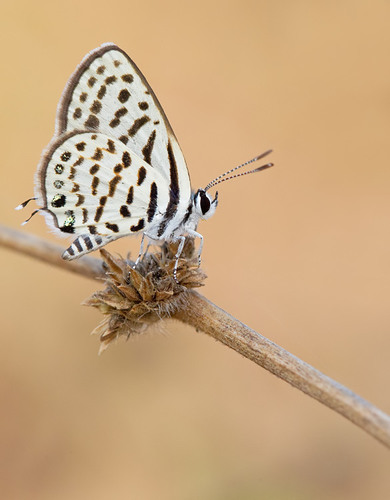
This species is Tarucus theophrastus (Fabricius, 1793). For males: the upperside ranges from pale purple to violet, with a blue suffusion visible in certain lighting, and underside markings show through the wings by transparency. On the forewing, the costal margin above vein 12 is strongly suffused with blue; the discocellulars have a transverse elongate blackish spot, plus a slender anteciliary black line. The hindwing is immaculate except for an anteciliary black line matching that on the forewing. The cilia of both forewings and hindwings are dull sullied white, with a brownish-black band along their bases. The underside is white, with the following black markings: On the forewing, an anteciliary line runs along the costa but does not extend all the way to the base; a streak extends from the base obliquely toward the costa; an irregularly placed oblique mark crosses the cell, with a spot below it in interspace 1; beyond this is a curved interrupted band, made of a spot in interspace 9 joined to a transverse bar across the discocellulars, with a detached spot in interspace 2 that coalesces with another spot in interspace 1; after this are four upper discal spots arranged in two pairs placed obliquely, the lower two spots are often coalescent; there is also a transverse postdiscal more or less macular curved band, and a subterminal transverse series of six round, equal-sized spots. On the hindwing, there is an obliquely placed basal streak, and a row of three spots across the cell, with the upper two spots being much elongated; there is a short bar on the discocellulars and an elongate, transverse, subcostal spot above it; there are four discal spots, the upper four arranged in two pairs placed obliquely, while the lower two are transverse and coalescent; the postdiscal band, subterminal transverse series of spots, and anteciliary line match those on the forewing; the postdiscal band is lunular, and all or some of the spots in the subterminal series have shining bluish metallic scales. Cilia match those on the upperside; the tail is black, tipped with white. Antennae, head, thorax and abdomen are black; the antenna shafts are ringed with white, the thorax has a small amount of bluish pubescence; on the underside, the palpi, thorax and abdomen are white. For females: the upperside is dark brown, with the wing bases suffused with bluish scales. On the forewing, the transverse discocellular spot matches the one seen in males, but is continued posteriorly by a black spot in interspace 2 that is coalescent with a similar spot in interspace 1 (in some specimens, these latter two spots are only visible via transparency from the underside); the medial area beyond the apex of the cell is white, crossed by an upper discal, macular, short black band that extends from vein 3 to vein 6; the ground color is uniform across the rest of the wing; the costal margin has some pale lines between veins 10, 11 and 12, and the broad terminal margin of ground color has an obscure transverse macular white line. On the hindwing, the basal, cellular and discal markings from the underside are more or less visible through transparency; there are postdiscal and subterminal transverse series of white somewhat quadrate spots, the two series converge and meet anteriorly in interspace 6; the outer series is margined by the series of black subterminal spots from the underside, which show through more or less plainly. The cilia of both forewings and hindwings, and the tail at the apex of vein 2 of the hindwing match those of the male. The underside is similar to that of the male, but the ground color is slightly yellowish, and the markings are more clearly defined. Antennae, head, thorax and abdomen match those of the male. This species is distributed across northern and western Africa, Arabia, Persia, Baluchistan, north-western Himalayas, the Punjab, western, central and southern India, Ceylon, Assam, and Upper Burma.