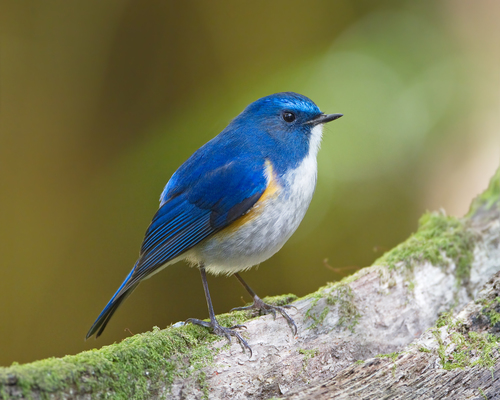
About Tarsiger rufilatus (Hodgson, 1845)
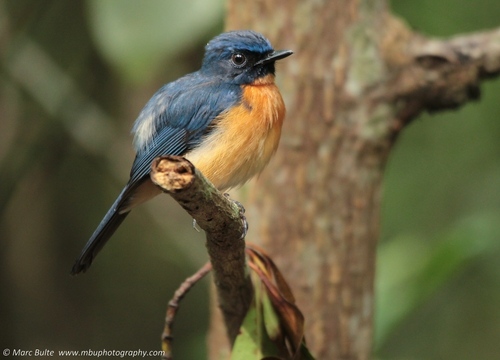
The Himalayan bluetail (scientific name Tarsiger rufilatus (Hodgson, 1845)) is a short-distance altitudinal migrant bird species. It breeds in the Himalaya, within the shrub layer of conifer and mixed conifer-oak forests. In wetter breeding areas, it occupies dwarf rhododendron, while it uses deciduous bushes in drier breeding areas. The dominant forest tree species in its breeding range is fir (Abies), but it can sometimes also be found in forests containing Picea smithiana, Pinus wallichiana, or Cupressus torulosa. Breeding occurs at elevations between 3000 and 4400 m, and the species does not range beyond the tree line during this season. In winter, it occurs at elevations of 1500 to 2500 m, typically in broadleaf evergreen forest, dense dark undergrowth, thickets, clearings, and treefall gaps with vine tangles, as well as open woodland. It is commonly seen along tracks, and favors ridges and mountain tops. The Himalayan bluetail is insectivorous.